Post
Best Zha Jiang Mian 2026: Beijing’s Ultimate Meat Sauce Noodles Explained
May
Zha Jiang Mian: Beijing’s Ultimate Meat Sauce Noodles Explained
If Beijing had a single, official national dish — a single, beloved preparation that most completely, accurately captures the city’s culinary soul, character, and spirit — many passionate, knowledgeable food lovers would argue it is Zha Jiang Mian (炸醬麵). This robust, hearty, deeply flavorful, utterly satisfying noodle dish with its rich, savory, fermented bean paste and pork sauce, topped with crisp, fresh, julienned vegetables, is the quintessential, definitive expression of northern Chinese cooking philosophy: bold, substantial, honest, unpretentious, hearty, and deeply, profoundly satisfying. It is the food of emperors and laborers alike, unchanged in its fundamental, essential character for centuries. This is Beijing on a plate — straightforward, confident, and delicious.
What Is Zha Jiang Mian?
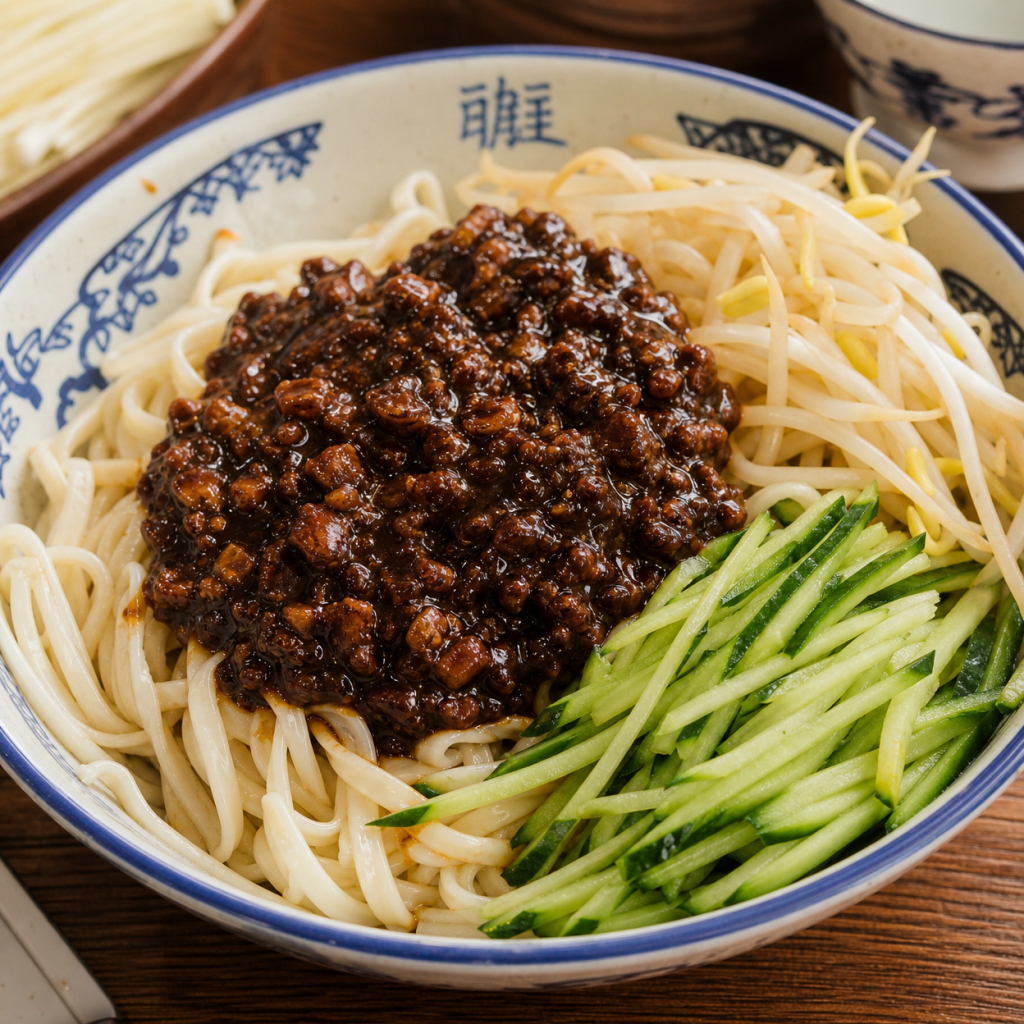
Zha Jiang Mian consists of thick, chewy, satisfying wheat noodles topped generously with a sauce made by slow-cooking ground pork with tian mian jiang (sweet bean sauce) and huangdou jiang (yellow soybean paste) until thick, glossy, dark, and deeply, complexly savory. The noodles and rich, aromatic sauce are served with an array of fresh, crisp vegetables — julienned cucumber, blanched bean sprouts, blanched soybeans, shredded radish, and thinly sliced scallions — which are mixed in at the table to create a beautiful, harmonious combination of warm, savory sauce, cold, crisp, refreshing vegetables, and chewy, substantial, satisfying noodles. The contrast of temperatures and textures is part of the dish’s enduring appeal.
The Sauce: Where the Magic Happens
The sauce — the zha jiang itself — is the absolute soul, heart, and defining character of this classic dish. The name means “fried sauce,” referring to the essential, critical step of frying the fermented bean pastes in rich pork fat to develop their deep, complex flavor before the ground meat is added. This slow, patient frying of the sauce is where the dish’s distinctive, memorable character is formed, layer by layer. Ground pork (ideally with some fat content for richness and flavor) is first cooked gently in a small amount of lard or vegetable oil until lightly browned, fragrant, and rendered.
The fermented bean pastes — a skillful combination of tian mian jiang (which is sweeter, darker, and milder) and huangdou jiang (which is saltier, more intensely savory, and more pungent) — are then added and cooked with the pork over medium-low heat, stirring constantly and patiently. This slow, careful frying develops the flavors of the fermented beans dramatically, intensifying their umami depth, complexity, and creating the rich, dark, glossy, irresistible sauce that coats the noodles so beautifully.
The sauce is finished with a splash of Shaoxing wine and a small amount of sugar if needed to balance the saltiness, then simmered gently until thick, concentrated, and deeply flavorful. At its beautiful best, a great zha jiang sauce is complex enough to be interesting, satisfying, and memorable on its own — simultaneously sweet, salty, savory, and deeply, profoundly umami.
The Noodles: Thick and Chewy Is the Standard
Unlike the delicate, thin noodles of southern Chinese cuisine, Zha Jiang Mian traditionally uses thick, hand-pulled or hand-cut wheat noodles that are substantial, robust enough to stand up to the heavy, clinging, flavorful sauce. In Beijing, the preferred noodle is roughly square in cross-section — about the thickness of a finger or a thick pencil — and has a satisfying, pleasant chew that contrasts with the soft, rich, clinging sauce. Hand-pulled noodles (la mian) are the traditional, cherished choice in noodle shops, but many home cooks successfully use commercially produced thick wheat noodles with excellent, satisfying results. The key is substantial, chewy, and satisfying.
The Vegetables: Essential Contrast
The vegetable accompaniments are not mere garnish or afterthought — they are an integral, essential, non-negotiable component of Zha Jiang Mian’s flavor and textural profile. The cool, crisp, refreshing julienned cucumber is particularly, absolutely essential; its fresh, clean, watery flavor and crisp texture provide a perfect, necessary, refreshing counterpoint to the warm, rich, intensely savory, heavy sauce.
Fresh bean sprouts add additional, pleasant crunch, while blanched soybeans provide protein, texture, and a pleasant, gentle chew. The beautiful, ritualistic mixing of warm noodles, rich sauce, and cool, crisp vegetables at the table is one of the most enjoyable, satisfying rituals of eating Zha Jiang Mian. Each diner mixes their own bowl to their own preference — some incorporating all the vegetables immediately, others eating in sections, enjoying different ratios of sauce to vegetables as they progress through the satisfying bowl.
Zha Jiang Mian in Beijing Culture
In Beijing, Zha Jiang Mian occupies the same cherished place in the local food culture that pasta occupies in Italian culture or ramen occupies in Japan — a deeply familiar, universally loved, fiercely debated dish that provokes strong, passionate opinions about the correct, proper way to prepare and eat it. Every Beijing family has their own, treasured version of the sauce, with slight, beloved variations in the ratio of sweet to savory bean paste, the addition of various aromatics, or the preferred vegetable accompaniments.
These precious variations are matters of genuine culinary identity, discussed with the passion, intensity, and love that other cultures reserve for far more prestigious, expensive dishes. To share a bowl of Zha Jiang Mian made according to your family’s recipe is to share a piece of your heritage and identity.
The Global Popularity of Dim Sum Culture
Over the past several decades, dim sum has expanded far beyond Southern China and Hong Kong, becoming one of the most internationally recognized forms of Chinese cuisine. Restaurants specializing in dim sum can now be found in major cities all around the world, from New York and Los Angeles to London, Sydney, Singapore, and Toronto. The appeal of dim sum comes from its social nature, incredible variety, and balance of flavors and textures.
Diners are encouraged to share multiple dishes, sample different combinations, and enjoy a relaxed dining experience with friends and family. This sense of togetherness has helped dim sum become much more than a meal — it is a cultural experience that people return to repeatedly.
Traditional dim sum meals are usually enjoyed during brunch or lunchtime, often accompanied by hot Chinese tea. The phrase “yum cha,” which means “drink tea” in Cantonese, reflects the deep connection between tea culture and dim sum dining. Different teas are paired with different dishes to balance richness and refresh the palate. Jasmine tea, pu-erh tea, chrysanthemum tea, and oolong tea are among the most popular choices in classic Cantonese teahouses. The tea not only complements the flavors of the food but also encourages conversation and a slower, more enjoyable dining pace.
Why Authentic Preparation Matters
Authentic dim sum preparation requires patience, precision, and years of experience. Skilled chefs spend years perfecting dough textures, fillings, steaming times, seasoning balances, and presentation techniques. Even a seemingly simple dumpling or bun can involve dozens of small details that determine whether the final result is average or exceptional. High-quality ingredients also play a critical role. Fresh seafood, carefully selected meats, premium soy sauce, sesame oil, and aromatic spices all contribute to the depth of flavor that defines authentic Cantonese cooking.
In many respected dim sum restaurants, recipes are passed down through generations of chefs and families. These traditions preserve techniques that have been refined over hundreds of years. While modern restaurants may experiment with fusion ingredients and contemporary presentation styles, the classic foundations of Cantonese dim sum remain timeless. Diners continue to appreciate dishes that honor tradition while delivering comfort, freshness, and carefully balanced flavor profiles.
Dim Sum as a Shared Experience
One of the greatest reasons dim sum remains beloved worldwide is its ability to bring people together. Families gather around round tables, friends share bamboo steamers filled with freshly prepared dishes, and conversations flow naturally throughout the meal. Unlike individual plated dining experiences, dim sum encourages sharing and interaction. Every dish placed at the center of the table becomes part of a collective experience that creates memories as meaningful as the food itself.
Whether enjoyed at a luxurious Hong Kong tea house or a small neighborhood restaurant, classic dim sum dishes continue to represent warmth, hospitality, and culinary craftsmanship. Their enduring popularity proves that carefully prepared comfort food never goes out of style. For food lovers everywhere, exploring authentic dim sum remains one of the most rewarding journeys in the world of Chinese cuisine.
