
Post
Best Congee with Century Egg and Pork 2026: The Restorative Power of Chinese Rice Porridge
May
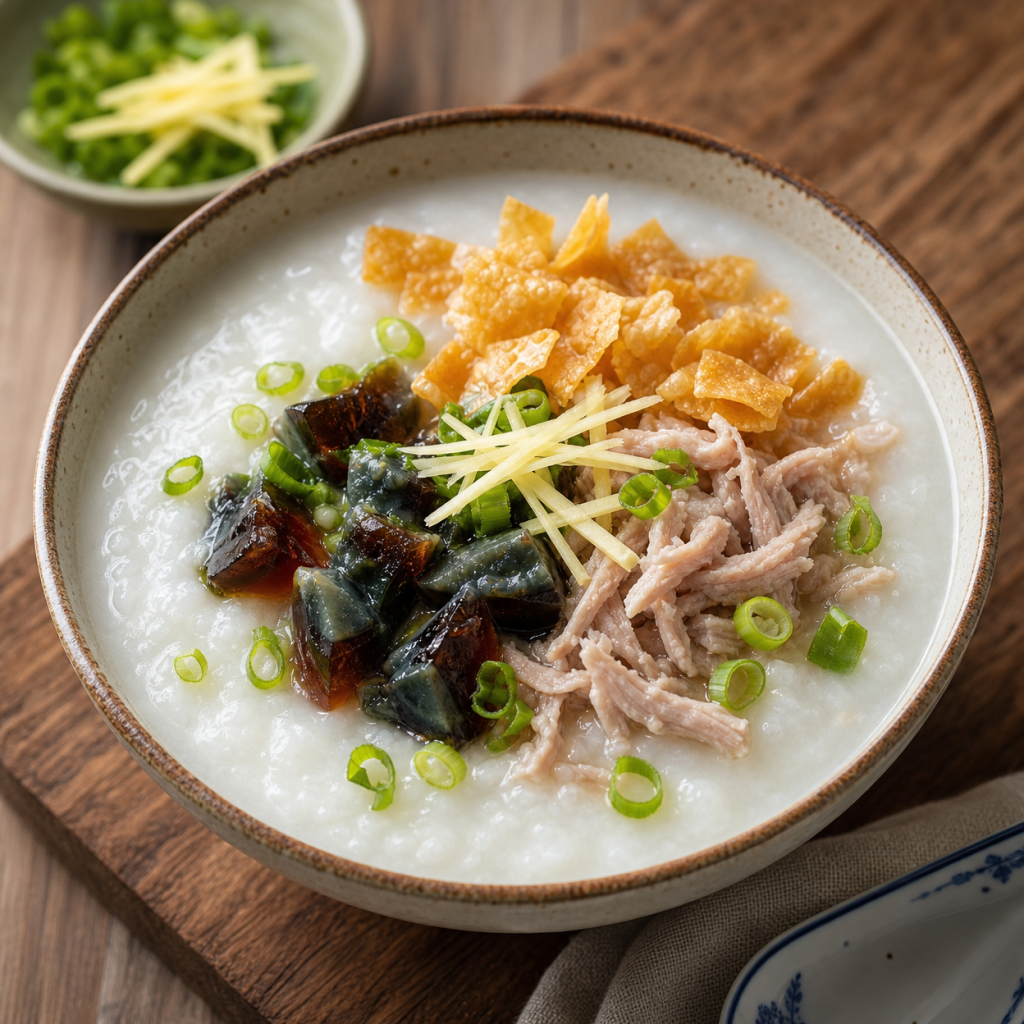
Congee with Century Egg and Pork: The Restorative Power of Chinese Rice Porridge
There is a very good, profound reason that congee — smooth, silky, comforting rice porridge — is the food that Chinese parents lovingly make for sick children, that exhausted travelers gratefully seek out when they arrive after a long, tiring journey, and that hungover university students crave above all other so-called remedies. Congee has a quality of comfort, nourishment, and healing that goes far beyond its mild, gentle flavor and soft, soothing texture — it is the food of care, of recovery, of love, and of profound, uncomplicated, deeply satisfying nourishment. And of all the many, wonderful versions of congee prepared across China, the classic Cantonese combination of Pei Dan Sou Yuk Zhou — congee with century egg and salted pork — is among the most beloved, comforting, and deeply, profoundly satisfying.
What Is Congee?
Congee (粥, zhou in Mandarin, jook in Cantonese) is a thick, creamy, satisfying rice porridge made by cooking rice in a large, generous amount of water or stock until the individual grains break down completely and the mixture becomes a smooth, creamy, silky, homogeneous mass. The texture ranges from slightly grainy — when the rice has broken down but still has some pleasant, discernible structure — to completely smooth, silky, and velvety, when it has been cooked long enough to become entirely uniform, almost like a savory pudding. The Cantonese tradition strongly favors the latter — a completely smooth, silky, luscious porridge with no visible grain structure, just pure, comforting, velvety smoothness. This is congee at its most refined and comforting.
The Century Egg: Misunderstood and Magnificent
For many non-Chinese diners, the century egg (皮蛋, pidan) is one of the most daunting, intimidating, misunderstood ingredients in all of Chinese cuisine. Its startling appearance — a dark, translucent, slightly greenish-black “white” surrounding a creamy, soft, dark green-grey yolk — looks alarming, even frightening, to those accustomed to fresh, white, familiar eggs. But the unique flavor and silky, creamy texture of a properly, carefully made century egg are genuinely, surprisingly extraordinary. Century eggs are made by preserving duck, chicken, or quail eggs in a mixture of clay, ash, salt, quicklime, and rice hulls for several weeks to several months (not a century, despite the wildly inaccurate and intimidating name). The alkaline preservation process dramatically, fundamentally changes the texture and flavor of the egg — the white becomes firm, translucent, and gelatinous, with a slight, pleasant wobble, and turns a dark, attractive amber; the yolk becomes creamy, soft, rich, and intensely, complexly flavored, with a complex, slightly sulfurous, deeply savory, almost cheesy taste that has been memorably described as similar to very aged, funky cheese. In congee, century eggs are either cubed and stirred in during the final stages of cooking, allowing them to melt partially, beautifully into the porridge, or sliced and arranged on top as an attractive garnish. Their intense, complex, savory flavor provides a deeply satisfying counterpoint to the mild, soothing, comforting porridge.
The Salted Pork
The sou yuk (瘦肉) — literally “lean meat” — in this classic congee is typically pork loin or shoulder that has been marinated overnight in a mixture of soy sauce, sesame oil, white pepper, and sugar, then shredded very finely. This marinated, flavorful pork is added to the congee in the final minutes of cooking, where it cooks quickly, gently in the hot porridge and distributes its seasoning beautifully throughout the entire bowl. The salt and soy from the marinated pork gently season the congee from within, ensuring that every single, comforting spoonful is perfectly, pleasantly seasoned rather than relying on condiments added at the table. This internal seasoning is the secret to a truly great bowl of congee.
Making Perfect Congee
The secret to perfect, silky, Cantonese-style congee is patience, time, and the right ratio of rice to liquid — typically one cup of raw rice to ten or even twelve cups of water or flavorful stock. Some experienced cooks add a small amount of oil to the raw, uncooked rice before cooking to help the grains break down more evenly, smoothly. The rice is brought to a boil and then reduced to the absolute lowest possible simmer, stirring occasionally to prevent sticking to the bottom, for approximately one to two hours, or even longer. Some clever Cantonese cooks use a small trick of freezing the raw rice for a few hours before cooking — the expansion and contraction of the freezing process breaks the grain structure slightly, allowing the rice to break down much faster and into a smoother, silkier, more luxurious porridge. Others swear by adding a piece of dried tangerine peel to the cooking water for a subtle, lovely, citrusy fragrance that lifts the congee beautifully and adds a layer of aromatic complexity.
The Condiments and Accompaniments
At the table, Cantonese congee is traditionally accompanied by a delightful range of garnishes and condiments that allow each diner to customize their bowl to their own taste. Julienned fresh ginger, chopped fresh scallions, toasted sesame oil, white pepper, crispy fried shallots, and light soy sauce are standard, welcome offerings. Crispy fried dough sticks (you tiao), broken into pieces and stirred into the hot congee, add delightful crunch, texture, and substance. These simple, humble elements transform a simple bowl of soothing porridge into an interactive, personalized, delightful experience — one of the great, beloved hallmarks of Cantonese communal, family-style dining culture. Congee is not just food; it is an experience of care, comfort, and community.
The Global Popularity of Dim Sum Culture
Over the past several decades, dim sum has expanded far beyond Southern China and Hong Kong, becoming one of the most internationally recognized forms of Chinese cuisine. Restaurants specializing in dim sum can now be found in major cities all around the world, from New York and Los Angeles to London, Sydney, Singapore, and Toronto. The appeal of dim sum comes from its social nature, incredible variety, and balance of flavors and textures. Diners are encouraged to share multiple dishes, sample different combinations, and enjoy a relaxed dining experience with friends and family. This sense of togetherness has helped dim sum become much more than a meal — it is a cultural experience that people return to repeatedly.
Traditional dim sum meals are usually enjoyed during brunch or lunchtime, often accompanied by hot Chinese tea. The phrase “yum cha,” which means “drink tea” in Cantonese, reflects the deep connection between tea culture and dim sum dining. Different teas are paired with different dishes to balance richness and refresh the palate. Jasmine tea, pu-erh tea, chrysanthemum tea, and oolong tea are among the most popular choices in classic Cantonese teahouses. The tea not only complements the flavors of the food but also encourages conversation and a slower, more enjoyable dining pace.
Why Authentic Preparation Matters
Authentic dim sum preparation requires patience, precision, and years of experience. Skilled chefs spend years perfecting dough textures, fillings, steaming times, seasoning balances, and presentation techniques. Even a seemingly simple dumpling or bun can involve dozens of small details that determine whether the final result is average or exceptional. High-quality ingredients also play a critical role. Fresh seafood, carefully selected meats, premium soy sauce, sesame oil, and aromatic spices all contribute to the depth of flavor that defines authentic Cantonese cooking.
In many respected dim sum restaurants, recipes are passed down through generations of chefs and families. These traditions preserve techniques that have been refined over hundreds of years. While modern restaurants may experiment with fusion ingredients and contemporary presentation styles, the classic foundations of Cantonese dim sum remain timeless. Diners continue to appreciate dishes that honor tradition while delivering comfort, freshness, and carefully balanced flavor profiles.
Dim Sum as a Shared Experience
One of the greatest reasons dim sum remains beloved worldwide is its ability to bring people together. Families gather around round tables, friends share bamboo steamers filled with freshly prepared dishes, and conversations flow naturally throughout the meal. Unlike individual plated dining experiences, dim sum encourages sharing and interaction. Every dish placed at the center of the table becomes part of a collective experience that creates memories as meaningful as the food itself.
Whether enjoyed at a luxurious Hong Kong tea house or a small neighborhood restaurant, classic dim sum dishes continue to represent warmth, hospitality, and culinary craftsmanship. Their enduring popularity proves that carefully prepared comfort food never goes out of style. For food lovers everywhere, exploring authentic dim sum remains one of the most rewarding journeys in the world of Chinese cuisine.
