Post
Best Hui Guo Rou Twice-Cooked Pork 2026: The Sichuan Home-Cooking Classic You’ll Want Every Week
May
Hui Guo Rou Twice-Cooked Pork: The Sichuan Home-Cooking Classic You’ll Want Every Week
If glorious Peking Duck is the majestic emperor of Chinese dishes — magnificent, demanding, impressive, requiring specialist skill, equipment, and expense — then humble Hui Guo Rou is its beloved, democratic, everyday counterpart: a dish that is deeply, profoundly satisfying, relatively accessible and affordable, and so consistently, reliably delicious that it has earned a permanent, honored place in the regular cooking rotation of Chinese home cooks for countless generations.
Twice-Cooked Pork (回鍋肉) is the honest, comforting kind of food that people specifically, nostalgically request when joyfully returning home after a long, tiring absence — the unforgettable taste of comfort, familiarity, family, and the particular, brilliant genius of Sichuan home cooking at its very best, most loving, and most satisfying.
What Is Hui Guo Rou?
Hui Guo Rou literally, charmingly means “return to the pot meat” — the honest “twice-cooked” description refers to the distinctive, essential two-stage cooking process that distinguishes this beloved dish from all other pork preparations.
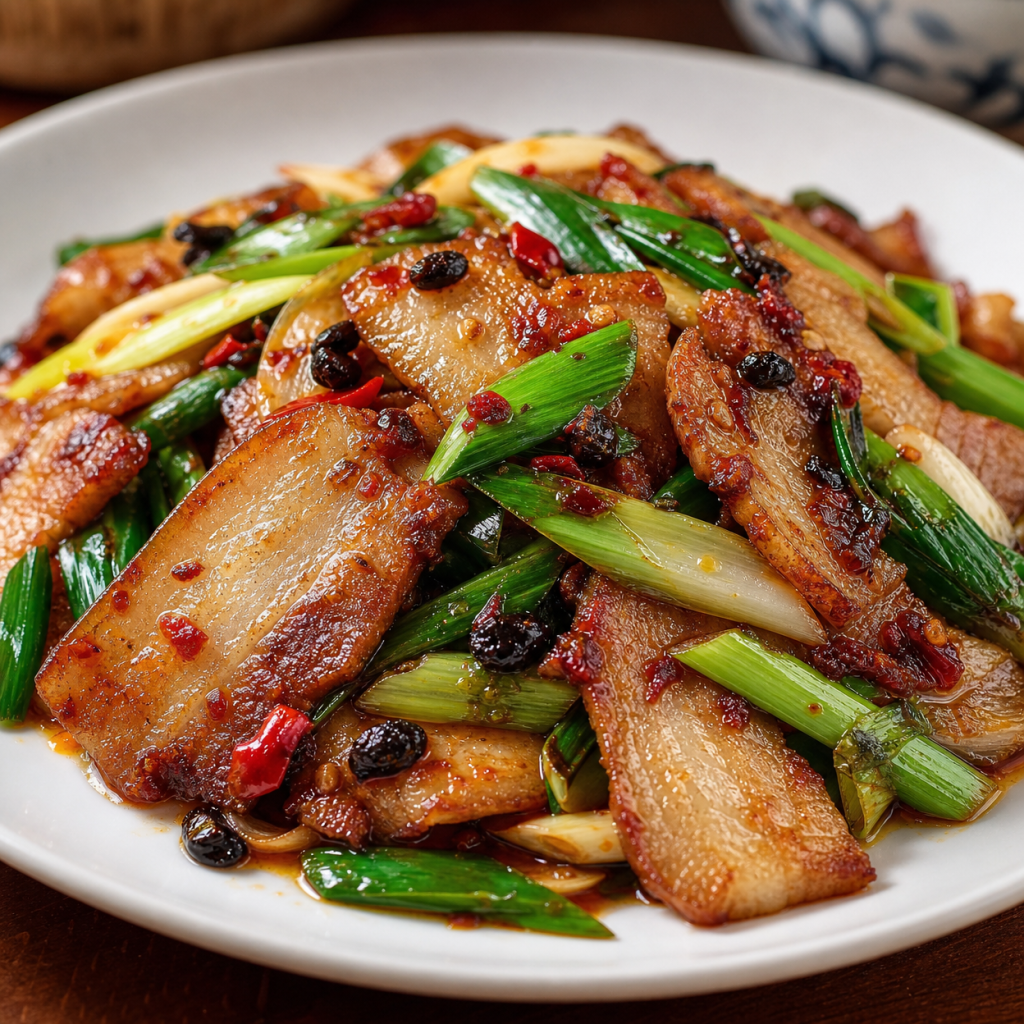
The pork belly is first simmered gently whole in water with aromatics until just barely cooked through, then removed, cooled, sliced thinly, and patiently returned to a screaming-hot wok for a second, dramatic cooking — the stir-frying stage — where it is beautifully combined with doubanjiang (spicy fermented bean paste), fermented black beans, leeks, garlic shoots, and soy sauce. The result is a dish of extraordinary depth, complexity, and satisfaction.
Why Cook the Pork Twice?
The essential, distinctive two-stage cooking process is not an accident of tradition or mere habit but a deliberate, brilliant technique that achieves glorious results completely impossible to achieve by any single, simple cooking method alone. The initial, gentle simmering cooks the pork through gently, evenly, without any browning, and creates a unique texture in the precious fat layers that would be very difficult to achieve through direct, aggressive stir-frying. The gentle cooling and careful slicing stage allows the pork to firm slightly, making it much, much easier to cut into even, thin, beautiful slices.
When these beautifully pre-cooked, cooled, sliced pieces hit the screaming-hot wok for the dramatic second cooking, something truly remarkable, magical happens: the edges curl up attractively as the precious fat contracts under the intense heat, creating the beautiful, signature “lantern shape” or “scallop shape” that is the proud hallmark of a properly, skillfully executed Hui Guo Rou. This beautiful curling exposes more surface area to the hot wok, creating additional browning, caramelization, and complexity that adds depth, richness, and character to the layered flavor. The fat renders slightly, beautifully during this second, dramatic cooking, becoming soft, silky, and luxurious rather than greasy or heavy, while the lean meat develops a slight, pleasant, satisfying char that provides essential textural contrast.
The Doubanjiang: Non-Negotiable
The rich, aromatic sauce of Hui Guo Rou is built proudly on doubanjiang — Pixian spicy fermented broad bean paste — which is fried carefully in shimmering oil first to release its deep color, aroma, and flavor before the precious pork is added. This essential, non-negotiable frying step caramelizes the natural sugars in the bean paste beautifully and intensifies its complex flavor dramatically, wonderfully. The quality of the doubanjiang matters enormously, profoundly — aged, traditional Pixian doubanjiang, available in well-stocked Chinese grocery stores, produces a noticeably deeper, richer, more complex, and more satisfying result than younger, cheaper, inferior versions.
To the carefully fried doubanjiang, a smaller amount of tian mian jiang (sweet wheat flour paste) is added, providing a gentle, pleasant balancing sweetness against the spicy, salty, pungent bean paste. Dark soy sauce adds additional, beautiful color and savory depth. The beautiful, harmonious combination of these rich, fermented condiments creates a glorious sauce that is simultaneously spicy, savory, slightly sweet, and deeply, profoundly umami — a glorious, clinging sauce that coats every single slice of precious pork and every single piece of fresh vegetable with complete, complex, satisfying flavor.
The Vegetables: Leeks, Garlic Shoots, and Bell Peppers
The fresh, vibrant vegetables in Hui Guo Rou provide essential, refreshing textural and flavor contrast to the rich, intensely seasoned, savory pork. Leeks and garlic shoots (the tender, delicate shoots of garlic plants, available in spring and highly prized in Sichuan cooking) are the traditional, authentic, and most beloved vegetable additions — their sharp, pungent, aromatic, slightly sweet flavor beautifully complements the rich doubanjiang and cuts through the pleasant richness of the pork fat beautifully, wonderfully. Green and red bell peppers are a more contemporary, colorful addition that have become widely accepted and loved, their fresh, sweet, crisp sweetness providing a pleasant, refreshing counterpoint to the savory, spicy, rich pork. All are welcome and delicious.
Hui Guo Rou as Family Food
In vibrant Sichuan and throughout China, Hui Guo Rou is fundamentally, proudly a family dish — eaten happily at home, at friendly family restaurants, and at the honest, straightforward, unpretentious canteen-style establishments that serve the comforting food of everyday life rather than reserved for rare, formal, expensive special occasions.
Its relatively modest, affordable ingredient cost, its genuine accessibility to competent, enthusiastic home cooks of all skill levels, and its deeply satisfying, familiar, beloved flavor profile make it the honest, comforting kind of food that people happily eat regularly rather than reserving for rare celebrations. This wonderful everyday quality, far from diminishing its high standing, is precisely what makes Hui Guo Rou so genuinely beloved — it is one of those rare, precious dishes that is genuinely, deeply special while generously pretending to be ordinary and humble. It is the food of home, family, and love.
The Global Popularity of Dim Sum Culture
Over the past several decades, dim sum has expanded far beyond Southern China and Hong Kong, becoming one of the most internationally recognized forms of Chinese cuisine. Restaurants specializing in dim sum can now be found in major cities all around the world, from New York and Los Angeles to London, Sydney, Singapore, and Toronto. The appeal of dim sum comes from its social nature, incredible variety, and balance of flavors and textures. Diners are encouraged to share multiple dishes, sample different combinations, and enjoy a relaxed dining experience with friends and family. This sense of togetherness has helped dim sum become much more than a meal — it is a cultural experience that people return to repeatedly.
Traditional dim sum meals are usually enjoyed during brunch or lunchtime, often accompanied by hot Chinese tea. The phrase “yum cha,” which means “drink tea” in Cantonese, reflects the deep connection between tea culture and dim sum dining. Different teas are paired with different dishes to balance richness and refresh the palate. Jasmine tea, pu-erh tea, chrysanthemum tea, and oolong tea are among the most popular choices in classic Cantonese teahouses. The tea not only complements the flavors of the food but also encourages conversation and a slower, more enjoyable dining pace.
Why Authentic Preparation Matters
Authentic dim sum preparation requires patience, precision, and years of experience. Skilled chefs spend years perfecting dough textures, fillings, steaming times, seasoning balances, and presentation techniques. Even a seemingly simple dumpling or bun can involve dozens of small details that determine whether the final result is average or exceptional. High-quality ingredients also play a critical role. Fresh seafood, carefully selected meats, premium soy sauce, sesame oil, and aromatic spices all contribute to the depth of flavor that defines authentic Cantonese cooking.
In many respected dim sum restaurants, recipes are passed down through generations of chefs and families. These traditions preserve techniques that have been refined over hundreds of years. While modern restaurants may experiment with fusion ingredients and contemporary presentation styles, the classic foundations of Cantonese dim sum remain timeless. Diners continue to appreciate dishes that honor tradition while delivering comfort, freshness, and carefully balanced flavor profiles.
Dim Sum as a Shared Experience
One of the greatest reasons dim sum remains beloved worldwide is its ability to bring people together. Families gather around round tables, friends share bamboo steamers filled with freshly prepared dishes, and conversations flow naturally throughout the meal. Unlike individual plated dining experiences, dim sum encourages sharing and interaction. Every dish placed at the center of the table becomes part of a collective experience that creates memories as meaningful as the food itself.
Whether enjoyed at a luxurious Hong Kong tea house or a small neighborhood restaurant, classic dim sum dishes continue to represent warmth, hospitality, and culinary craftsmanship. Their enduring popularity proves that carefully prepared comfort food never goes out of style. For food lovers everywhere, exploring authentic dim sum remains one of the most rewarding journeys in the world of Chinese cuisine.
