
Post
The Ultimate Guide to Har Gow: Mastering the King of Cantonese Dim Sum
May
The Ultimate Guide to Har Gow: Mastering the King of Cantonese Dim Sum
Walk into any traditional Cantonese dim sum restaurant on a Sunday morning and you will immediately sense the energy — bamboo steamers stacked high, the clatter of carts, the hum of conversation in multiple dialects, and the intoxicating aroma of freshly steamed dumplings filling every corner of the room. Amid the glorious chaos of dim sum culture, one dish reigns supreme: Har Gow, the shrimp dumpling that has earned the unofficial title of King of Dim Sum. This delicate, translucent dumpling is the ultimate test of a dim sum chef’s skill, requiring years of dedicated practice to perfect the paper-thin wrapper and the signature pleats. For food lovers and culinary enthusiasts, mastering the appreciation of Har Gow is a rewarding journey into the very heart of Cantonese culinary culture, a culture that values freshness, texture, and the honest expression of high-quality ingredients above all else. Unlike many other dumplings found in Chinese cuisine, Har Gow is not meant to be heavy or filling. Instead, it is a celebration of lightness, delicacy, and the natural sweetness of fresh shrimp. Every element, from the wrapper to the filling to the precise steaming time, is carefully calibrated to create a harmonious eating experience that is greater than the sum of its parts.
What Is Har Gow?
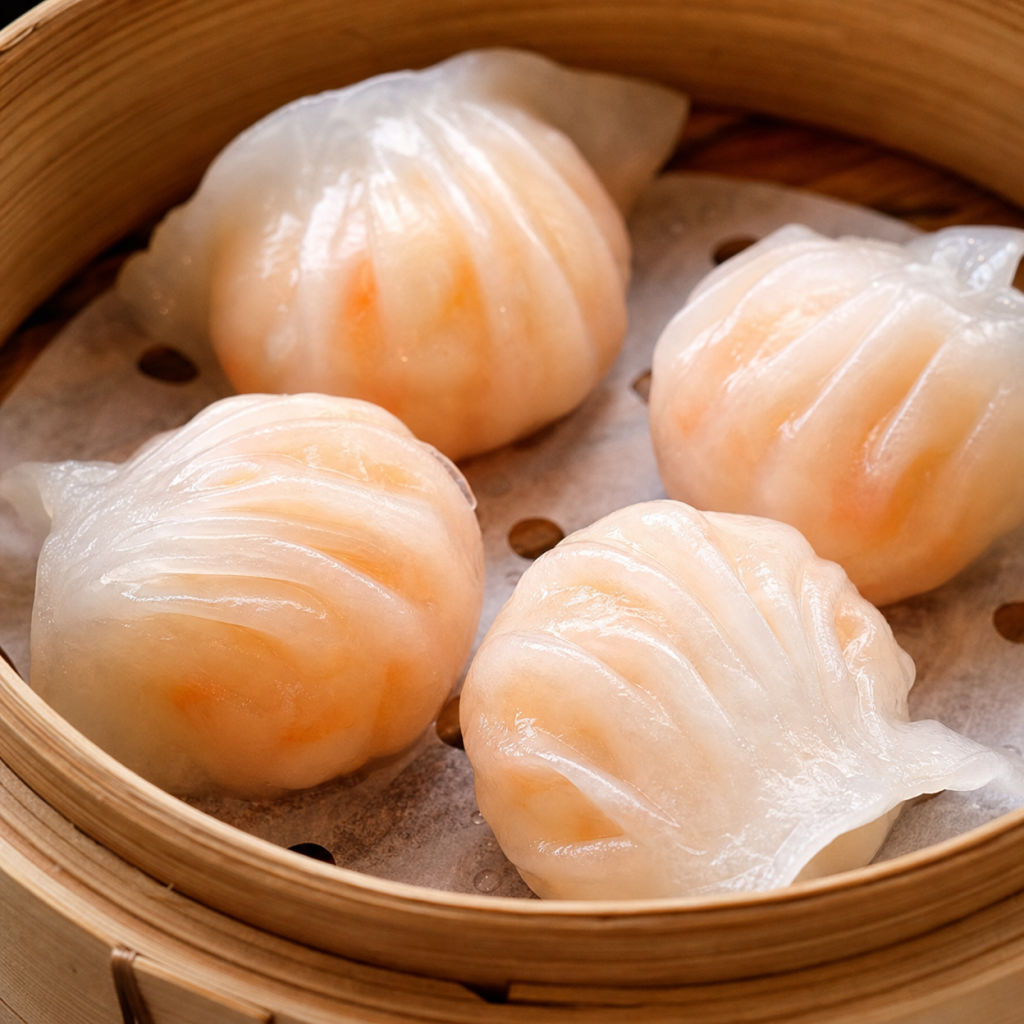
Har Gow (蝦餃), pronounced “ha-gow” in Cantonese, is a steamed shrimp dumpling made from a translucent wheat starch wrapper that encases a filling of fresh whole shrimp, bamboo shoots, and aromatics. The wrapper, made primarily from wheat starch and tapioca starch, becomes delightfully translucent when steamed, allowing the pink-orange shrimp filling to glow through like a beautiful lantern. This transparency is one of the defining characteristics of authentic Har Gow and is what sets it apart visually from all other dumplings. What truly sets Har Gow apart from virtually every other dumpling in the world, however, is the extraordinary level of skill required to produce it. A well-made Har Gow wrapper must be thin enough to be nearly see-through yet paradoxically strong enough to hold together without tearing during the steaming process. Each individual dumpling must be pleated carefully by hand with a minimum of seven folds — traditionally up to ten — using a special cleaver technique that creates the beautiful accordion-like ridges along one side. These pleats are not merely decorative; they serve a functional purpose by allowing the wrapper to expand and contract during steaming without breaking. A Har Gow with fewer than seven pleats is considered by purists to be inferior, and many dim sum chefs spend years perfecting their pleating technique before they are allowed to make Har Gow for customers.
The History of Har Gow
The fascinating origins of Har Gow can be traced back centuries to the teahouses along the Pearl River delta in Guangdong province, where yum cha — the beloved tradition of drinking tea and sharing small dishes — first flourished during the Tang Dynasty. Early versions of Har Gow were a much more rustic affair, eaten by hardworking fishermen who simply boiled fresh shrimp dumplings in the very rivers where they worked. These early dumplings were practical, portable meals rather than the refined delicacies we know today. As Cantonese teahouse culture became increasingly sophisticated and refined during the Qing Dynasty, Har Gow evolved dramatically into the elegant, precisely crafted dumpling we recognize and love today. By the early 20th century, Har Gow had become the definitive benchmark by which all dim sum chefs were judged. The famous saying in Cantonese culinary circles goes: “If you can make a good Har Gow, you can make anything.” This is because the humble dumpling demands mastery of multiple challenging techniques simultaneously — precise dough hydration, paper-thin rolling, controlled steaming temperatures, and intricate hand-pleating. A chef who can consistently produce perfect Har Gow has demonstrated a level of skill that translates to virtually every other dish in the dim sum repertoire. This is why Har Gow remains the gold standard in Cantonese dim sum kitchens to this day.
The Anatomy of a Perfect Har Gow
Every single element of a properly made Har Gow is governed by strict, exacting standards that serious dim sum chefs take deeply seriously. There is no room for compromise or shortcuts. The wrapper dough is made from a precise combination of wheat starch and tapioca starch, mixed with boiling water, a pinch of fine salt, and a small amount of lard or vegetable shortening. The boiling water is absolutely crucial — it partially cooks the starches immediately upon mixing, creating a dough that is smooth, pliable, and slightly elastic, unlike any other dumpling dough. This unique dough must be rolled to an extremely precise thickness — thin enough to be translucent but thick enough not to tear when filled and pleated. Each wrapper is typically four to five inches in diameter and is cut into a perfect circle using the flat blade of a Chinese cleaver, a specialized technique that requires years of dedicated practice to master.
Authentic Har Gow filling contains whole or roughly chopped fresh shrimp — never pre-cooked or frozen, as freezing damages the delicate texture of the shrimp. The fresh shrimp are gently seasoned with salt, sugar, white pepper, sesame oil, and a small amount of cornstarch to bind everything together beautifully. Finely chopped bamboo shoots are the traditional secondary ingredient, adding a subtle, pleasant crunch that contrasts beautifully with the plump, juicy shrimp. Some modern variations include water chestnuts for additional texture or a small amount of pork fat for richness, though traditional purists argue that the shrimp alone should be the star of the show. The filling must be moist but not wet; excess liquid will cause the delicate wrapper to tear during steaming, ruining the dumpling.
The pleating of Har Gow is where true artistry meets exacting precision. The wrapper is placed in the non-dominant hand, the filling is placed slightly off-center, and the wrapper is folded in half. The pleating process then begins on the back edge of the wrapper — the chef uses the thumb and index finger to create a series of small, even, evenly spaced folds that gather the back of the wrapper while the front remains perfectly smooth. This creates the characteristic crescent shape with a flat, smooth front and a beautifully pleated back. The finished dumpling should stand upright on its flat base, with the pleats evenly spaced and clearly defined. A perfect Har Gow has exactly ten pleats — no more, no less — though seven is considered acceptable in most restaurants. The pleats should be deep enough to be visible but not so deep that they create thick, doughy spots.
Steaming: The Final Test of Skill
Har Gow is always steamed rather than boiled or fried, as steaming is the gentlest cooking method and best preserves the delicate texture of both the wrapper and the filling. The dumplings are carefully placed on small squares of parchment paper or lightly oiled bamboo slats inside bamboo steamers and cooked over vigorously boiling water for approximately six to eight minutes. The steam cooks the dumplings evenly from all sides, making the wrappers beautifully translucent and allowing the shrimp inside to cook through while remaining juicy and tender. Over-steaming is a common mistake that results in broken wrappers and rubbery shrimp. The finished Har Gow should emerge from the steamer gleaming and slightly puffy, with a skin that is smooth and glistens attractively under the light. The pleats should be clearly defined but not stiff or doughy. When picked up with chopsticks, the dumpling should hold together without any tearing, and the skin should have a gentle, pleasant resistance — not too thick, not paper-thin, but just right.
How to Eat Har Gow Properly
Har Gow is best eaten immediately after steaming, when the wrapper is at its most delicate and the shrimp filling is piping hot. In traditional dim sum dining, Har Gow is served in a bamboo steamer of three or four pieces. The proper way to enjoy them is with a small dish of premium light soy sauce and a touch of chili oil or Chinese mustard on the side. Some purist diners prefer to eat Har Gow without any dipping sauce at all, arguing that the quality of the shrimp should speak for itself without any interference. Chopstick technique is surprisingly important — Har Gow should be picked up gently from the side, not speared from above, to avoid breaking the delicate skin. The dumpling should be bitten in half rather than eaten whole, allowing you to appreciate the texture of the wrapper before the full burst of shrimp flavor hits your palate. The contrast between the silky wrapper and the snappy shrimp is what makes Har Gow so special.
Why Har Gow Deserves Its Crown
The enduring supremacy of Har Gow in the dim sum hierarchy is not merely a matter of tradition or nostalgia. It is a dish that genuinely rewards quality — of ingredients, technique, and attention to detail. There is nowhere to hide a shortcut in Har Gow. The wrapper either has the right texture or it does not. The shrimp are either fresh and sweet or they are not. The pleating either demonstrates mastery or it reveals inexperience. This demanding transparency is what makes a truly great Har Gow one of the most satisfying things you can eat anywhere in the world of Chinese cuisine. Whether you are a lifelong devotee of dim sum or encountering it for the first time, Har Gow is always the right place to start — and always worth returning to, bite after perfect bite. In a world of increasingly complex and fussy dishes, Har Gow stands as a testament to the beauty of simplicity when executed with perfect skill.
