Post
Har Cheung: Why Shrimp Rice Noodle Rolls Are the Dim Sum World’s Best-Kept Secret
May
Har Cheung: Why Shrimp Rice Noodle Rolls Are the Dim Sum World’s Best-Kept Secret
Among the extensive, beloved repertoire of Cantonese dim sum, Har Cheung — shrimp rice noodle rolls — occupies a peculiar and wonderful position. It is simultaneously one of the most popular, most-ordered dishes at any dim sum restaurant and one that rarely receives the same level of international attention or media coverage as its more famous companions like Har Gow or Char Siu Bao. Yet ask any serious, dedicated dim sum enthusiast what they would choose if forced to eat only one single item for the rest of their life, and Har Cheung would receive a surprising, impressive number of votes. There is something ineffable about the sublime, perfect combination of silky, translucent, slippery noodle and sweet, fresh, perfectly cooked shrimp that hits a note of pure, unadulterated perfection that few other dishes in any cuisine can match. Har Cheung is the quiet overachiever of the dim sum world — not flashy, not famous, but consistently, reliably, wonderfully delicious.
What Is Har Cheung?
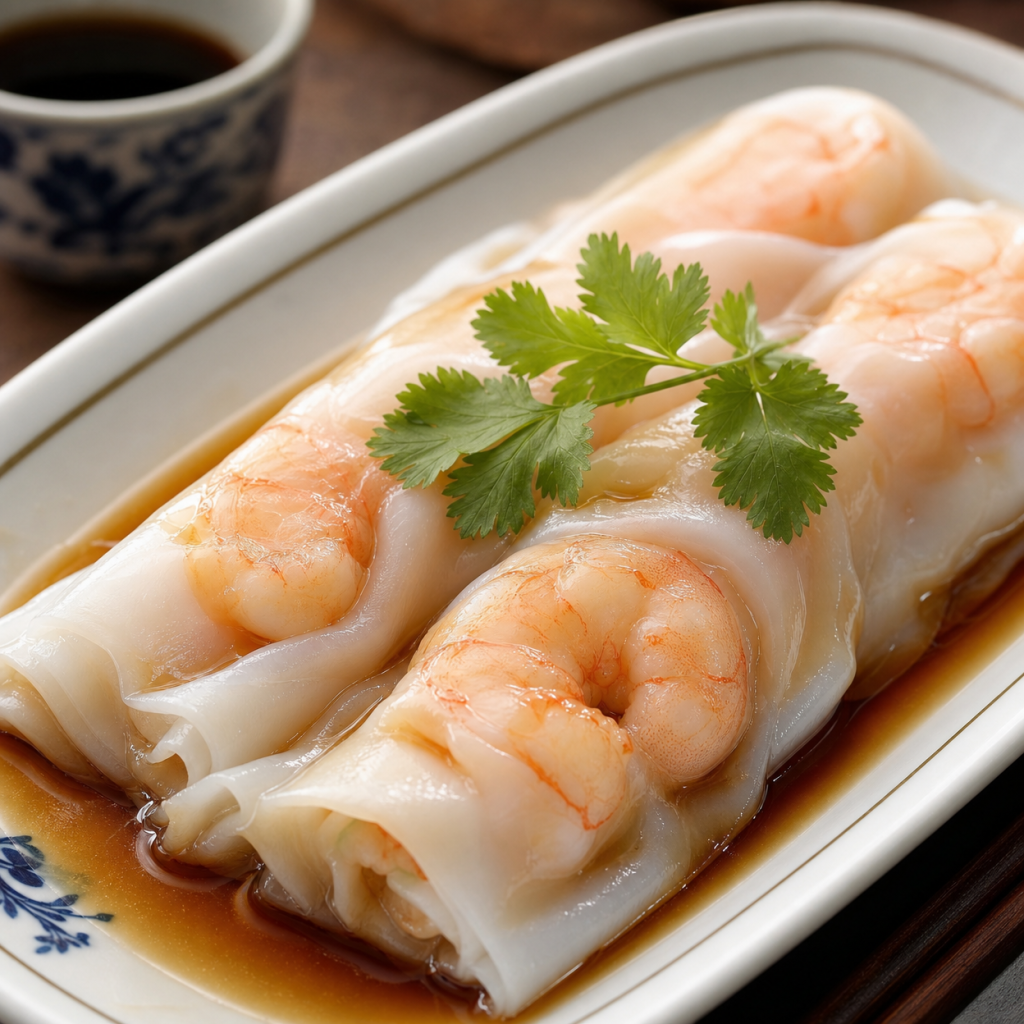
Har Cheung (蝦腸) is a specific, beloved variation of Cheung Fun (rice noodle rolls) in which whole, lightly seasoned, fresh shrimp are carefully placed on the freshly steamed rice noodle sheet before rolling. The beautiful result is a plump, silky, elegant, appetizing roll with visible shrimp inside — the beautiful pink-orange color of the shrimp glows attractively through the translucent wrapper, making Har Cheung as visually appealing and enticing as it is delicious. The rolls are sliced into bite-sized sections and served with the essential, classic Cheung Fun sauce combination of sweet soy sauce, aromatic sesame paste, and optional chili oil. This is a dish that celebrates the beauty of simplicity, freshness, and honest cooking. There are no complicated techniques or exotic ingredients here — just perfect shrimp, a perfect wrapper, and perfect sauce.
The Quality of the Shrimp: Everything Matters
Unlike many dishes where one ingredient can compensate for another’s shortcoming, Har Cheung has absolutely nowhere to hide inferior or low-quality shrimp. The radically minimalist nature of the dish — thin, delicate, translucent noodle wrapper, beautiful shrimp, simple sauce — means that the quality of the seafood is immediately, unmistakably apparent to any discerning diner. The shrimp must be fresh, sweet, and plump, with a firm, satisfying, audible snap when bitten. Frozen or previously frozen shrimp, while perfectly acceptable in many other preparations, cannot deliver the same pure, clean, oceanic, delightful sweetness that truly fresh shrimp provides in Har Cheung. Quality Har Cheung shrimp are typically whole, medium to large in size, deveined but left beautifully uncut so they retain their natural, appealing, attractive shape inside the noodle roll. They are seasoned simply and respectfully — just salt, white pepper, a small amount of sesame oil, and sometimes a touch of cornstarch — so that the gentle seasoning enhances rather than masks the natural, delicate, wonderful flavor of the seafood.
The Noodle Sheet: Achieving Perfection
The Cheung Fun wrapper for Har Cheung must be made with particular, loving, careful care, as the shrimp are placed on the hot, just-steamed noodle sheet immediately before rolling. This means the chef must work quickly, confidently, and efficiently, spreading the shrimp across the sheet while it is still fresh, hot, flexible, and pliable from the steamer and rolling the noodle before it cools and loses its flexibility and becomes brittle. The thickness of the wrapper is absolutely, critically important — thinner than in other versions of Cheung Fun to allow the beautiful, pink shrimp to show through visually, but thick enough to hold together perfectly when rolled without tearing. Achieving this delicate, demanding balance consistently, roll after perfect roll, over the course of a busy, demanding, high-pressure dim sum service, is a true, impressive skill that experienced Cheung Fun makers develop over many years of daily, dedicated practice.
The Sauce: The Final, Essential Touch
The sauce applied to Har Cheung at the table is not an afterthought or an optional extra but an integral, essential, non-negotiable part of the dish’s complete, harmonious flavor profile. The beautiful combination of sweet soy sauce, aromatic sesame paste, and spicy chili oil creates a layered, complex, satisfying depth that elevates the mild, slippery noodle and delicate, sweet shrimp into something with genuine character and memorability. Sweet soy sauce, made by blending dark soy sauce with sugar or maltose until thick and sweet, provides the primary seasoning and the characteristic dark, glossy, appetizing glaze that coats each piece of noodle roll when poured at the table. Chinese sesame paste, made from roasted white sesame seeds, has a toasty, nutty, deeply satisfying, aromatic flavor that adds richness, creaminess, and body to the sauce profile. Chili oil, optional but truly transformative, introduces gentle, pleasant heat, fragrance, and complexity that pushes Har Cheung from simply delicious to genuinely memorable, addictive, and unforgettable.
Har Cheung Versus Other Cheung Fun Variations
While all Cheung Fun variations share the same wonderful, silky noodle wrapper, each different filling creates a distinctly different eating experience. Char Siu Cheung, with its sweet, caramelized, rich BBQ pork, is richer, heavier, and more filling. Beef Cheung offers a denser, more robustly flavored, heartier option. Ja Leung — the fried dough stick version — provides an extraordinary, dramatic, delightful textural contrast between the soft, slippery noodle and the crispy, airy interior. But Har Cheung is generally considered the most refined, elegant, delicate, and pure of all the variations, thanks to the natural sweetness, beautiful color, and visual, appetizing appeal of the shrimp filling. It is the version that best showcases the delicate, translucent beauty of the Cheung Fun wrapper itself, and for many dim sum lovers, it is the definitive version.
Making Har Cheung at Home
While Har Cheung is more accessible to the dedicated, patient home cook than some other, more complex dim sum dishes, it does require specific equipment and plenty of practice. A flat steaming tray or a dedicated Cheung Fun steaming compartment is necessary to produce the thin, even, delicate noodle sheets. The batter must be prepared correctly with the right ratios, the steaming temperature must be consistent and hot enough, and the rolling must be accomplished quickly before the sheet cools and becomes brittle. Despite these challenges, home cooks who invest the time, patience, and effort to learn the technique are rewarded with one of the most satisfying results in all of Chinese home cooking — the proud, joyful knowledge that you have produced something both exquisitely beautiful and deeply, reliably delicious from the simplest, most humble of ingredients. It is a skill worth cultivating.
The Global Popularity of Dim Sum Culture
Over the past several decades, dim sum has expanded far beyond Southern China and Hong Kong, becoming one of the most internationally recognized forms of Chinese cuisine. Restaurants specializing in dim sum can now be found in major cities all around the world, from New York and Los Angeles to London, Sydney, Singapore, and Toronto. The appeal of dim sum comes from its social nature, incredible variety, and balance of flavors and textures. Diners are encouraged to share multiple dishes, sample different combinations, and enjoy a relaxed dining experience with friends and family. This sense of togetherness has helped dim sum become much more than a meal — it is a cultural experience that people return to repeatedly.
Traditional dim sum meals are usually enjoyed during brunch or lunchtime, often accompanied by hot Chinese tea. The phrase “yum cha,” which means “drink tea” in Cantonese, reflects the deep connection between tea culture and dim sum dining. Different teas are paired with different dishes to balance richness and refresh the palate. Jasmine tea, pu-erh tea, chrysanthemum tea, and oolong tea are among the most popular choices in classic Cantonese teahouses. The tea not only complements the flavors of the food but also encourages conversation and a slower, more enjoyable dining pace.
Why Authentic Preparation Matters
Authentic dim sum preparation requires patience, precision, and years of experience. Skilled chefs spend years perfecting dough textures, fillings, steaming times, seasoning balances, and presentation techniques. Even a seemingly simple dumpling or bun can involve dozens of small details that determine whether the final result is average or exceptional. High-quality ingredients also play a critical role. Fresh seafood, carefully selected meats, premium soy sauce, sesame oil, and aromatic spices all contribute to the depth of flavor that defines authentic Cantonese cooking.
In many respected dim sum restaurants, recipes are passed down through generations of chefs and families. These traditions preserve techniques that have been refined over hundreds of years. While modern restaurants may experiment with fusion ingredients and contemporary presentation styles, the classic foundations of Cantonese dim sum remain timeless. Diners continue to appreciate dishes that honor tradition while delivering comfort, freshness, and carefully balanced flavor profiles.
Dim Sum as a Shared Experience
One of the greatest reasons dim sum remains beloved worldwide is its ability to bring people together. Families gather around round tables, friends share bamboo steamers filled with freshly prepared dishes, and conversations flow naturally throughout the meal. Unlike individual plated dining experiences, dim sum encourages sharing and interaction. Every dish placed at the center of the table becomes part of a collective experience that creates memories as meaningful as the food itself.
Whether enjoyed at a luxurious Hong Kong tea house or a small neighborhood restaurant, classic dim sum dishes continue to represent warmth, hospitality, and culinary craftsmanship. Their enduring popularity proves that carefully prepared comfort food never goes out of style. For food lovers everywhere, exploring authentic dim sum remains one of the most rewarding journeys in the world of Chinese cuisine.
