Post
Cheung Fun: How Silky Rice Noodle Rolls Became a Dim Sum Icon
May
Cheung Fun: How Silky Rice Noodle Rolls Became a Dim Sum Icon
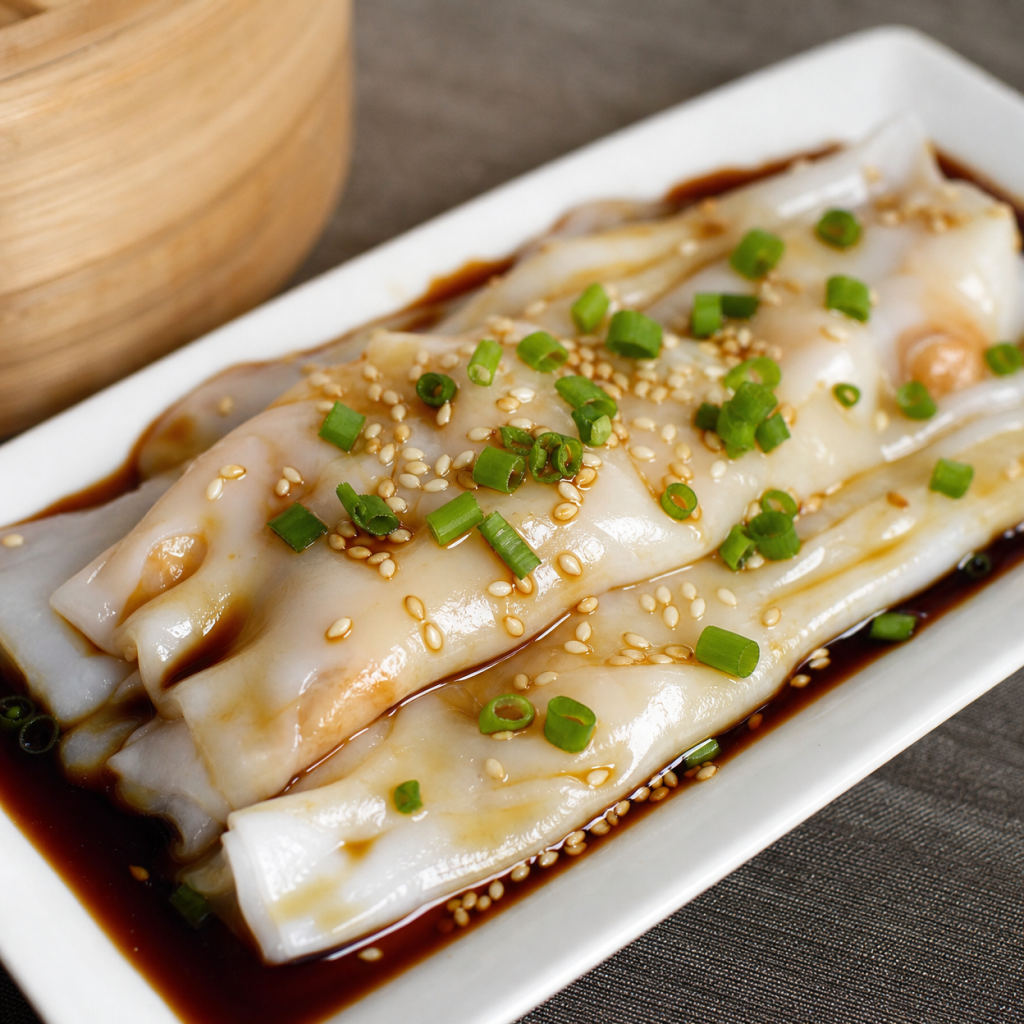
There is something almost magical, almost hypnotic about a perfectly made Cheung Fun. The way the translucent, almost glowing rice noodle sheet catches the soft light, the silky, slippery smoothness as it yields effortlessly to the gentle pressure of chopsticks, the way the sweet soy sauce pools attractively at the bottom of the plate and mingles with the nutty, aromatic sesame paste — every single element of this deceptively simple dish works in perfect concert to create one of the most elegantly simple and profoundly satisfying eating experiences in all of Chinese cuisine. Cheung Fun is living proof that greatness in cooking often comes from humility, simplicity, and a deep respect for ingredients. Unlike more assertive, heavily seasoned dim sum dishes, Cheung Fun is subtle, gentle, and soothing. It asks you to slow down, pay attention, and appreciate the quiet beauty of a thin sheet of steamed rice transformed, through care and skill, into something genuinely beautiful and deeply satisfying.
What Is Cheung Fun?
Cheung Fun (腸粉), literally translated as “intestine noodle” — a direct, unflinching reference to the noodle’s tubular, rolled shape vaguely resembling that organ — is a classic Cantonese dish made by steaming a thin batter of rice flour and water into smooth, silky, delicate noodle sheets, which are then carefully rolled around various savory fillings and served with a combination of sweet soy sauce, aromatic sesame paste, and optional chili oil. The dish can be enjoyed as an elegant part of a formal dim sum meal or as a standalone breakfast or quick snack from street vendors. Its delicate appearance, mild, pleasant flavor, and uniquely satisfying, slippery texture have made it a universal favorite, appealing even to diners who might find more aggressively flavored or unfamiliar dishes overwhelming. Cheung Fun is often the dish that introduces newcomers to the joys of dim sum, and it never disappoints.
The Origins of Cheung Fun
Cheung Fun originated in the Guangdong province of southern China, with some culinary historians tracing its specific roots to the Luoding area, where rice has been cultivated and processed for thousands of years. The dish was traditionally sold by street vendors who would set up makeshift steaming stations on busy street corners and roll the noodles fresh to order, allowing fascinated customers to watch the hypnotic, meditative process of the thin batter transforming into silky, translucent sheets right before their eyes. As Cantonese cuisine spread globally through waves of immigration and international trade, Cheung Fun became a beloved fixture in dim sum restaurants worldwide, gracefully crossing cultural boundaries with its universal, non-threatening appeal. Today, you can find excellent Cheung Fun in any major city with a significant Chinese population, from New York to London to Sydney to Tokyo.
The Batter: The Foundation of Great Cheung Fun
The batter for Cheung Fun is deceptively simple — just rice flour, wheat starch or tapioca starch, water, salt, and a small amount of oil — yet achieving the exact right ratio of these few ingredients is absolutely critical to the dish’s success. The specific combination of rice flour and wheat starch creates a batter that steams into a noodle sheet with the perfect balance of smoothness and a slight, pleasant chewiness. Too much rice flour and the noodle becomes brittle, dry, and prone to cracking; too much wheat starch and it becomes unpleasantly gummy, sticky, and heavy. The batter must be thin enough to spread into an extremely thin, almost translucent layer across the steaming tray, yet paradoxically thick enough to hold together as a coherent sheet when rolled. Experienced Cheung Fun makers can judge the correct consistency by feel and appearance alone, the enviable result of many years of daily practice and sensory refinement. The batter is typically rested for at least 30 minutes before steaming to allow the starches to hydrate fully.
The Steaming Process
Cheung Fun is traditionally steamed using a flat drawer-style steaming compartment in a dedicated Cheung Fun machine, or using individual flat trays placed over boiling water in a large wok. The thin batter is ladled onto a lightly oiled tray and quickly spread into a thin, even layer, then any chosen fillings are carefully placed on top. The tray is placed over vigorously boiling water and covered for just one to two minutes, during which the intense, moist steam cooks the batter into a delicate, translucent, silky noodle sheet. The timing is absolutely crucial — under-steamed and the fragile sheet will tear when you try to roll it; over-steamed and it becomes too thick, dense, heavy, and loses its characteristic silkiness. The finished sheet is then rolled from one end to the other using a flexible scraper or spatula, creating the signature cylindrical form. The entire process, from ladling to rolling, takes less than three minutes when done by an expert.
Fillings and Variations
Cheung Fun can be enjoyed plain or with a wonderful variety of fillings placed on the noodle sheet before rolling. The most popular version, Har Cheung, features whole, seasoned shrimp laid on the noodle sheet before rolling. The shrimp cook perfectly in the steam, remaining juicy, sweet, and snappy inside the silky wrapper. Char Siu Cheung uses sliced or chopped char siu (BBQ pork), filling the noodle roll with a sweet, caramelized pork flavor that pairs beautifully with the mild rice noodle. Ngau Yuk Cheung features seasoned minced beef with ginger and scallions, creating a hearty, savory, robust filling. Perhaps the most beloved and texturally interesting variation is Ja Leung, which involves wrapping the noodle sheet around a crispy, airy fried Chinese dough stick (you tiao), creating an extraordinary, dramatic textural contrast between the crispy, shattering interior and the soft, silky exterior that is utterly irresistible and addictive.
The Sauces: The Perfect Finish
The sauce combination served with Cheung Fun is just as important as the noodle itself. The classic trifecta consists of sweet soy sauce, sesame paste, and chili oil. The sweet soy sauce provides the primary seasoning and beautiful, appetizing color; the sesame paste adds nutty richness, aroma, and creamy texture; the chili oil contributes gentle, pleasant heat and additional depth for those who desire it. At the table, the server or the diner typically drizzles all three sauces over the sliced Cheung Fun, creating a beautiful, glossy coating that pools around the rolls and infuses every bite with layered, complex flavor. The balance between sweet, savory, rich, and spicy is a perfect microcosm of the broader harmony that characterizes great Cantonese cuisine. Whether you are experiencing Cheung Fun for the first time or the hundredth time, it has an uncanny ability to deliver genuine, reliable pleasure — proof that the most enduring foods are not always the most complex, but the most honest and beautifully executed.
The Global Popularity of Dim Sum Culture
Over the past several decades, dim sum has expanded far beyond Southern China and Hong Kong, becoming one of the most internationally recognized forms of Chinese cuisine. Restaurants specializing in dim sum can now be found in major cities all around the world, from New York and Los Angeles to London, Sydney, Singapore, and Toronto. The appeal of dim sum comes from its social nature, incredible variety, and balance of flavors and textures. Diners are encouraged to share multiple dishes, sample different combinations, and enjoy a relaxed dining experience with friends and family. This sense of togetherness has helped dim sum become much more than a meal — it is a cultural experience that people return to repeatedly.
Traditional dim sum meals are usually enjoyed during brunch or lunchtime, often accompanied by hot Chinese tea. The phrase “yum cha,” which means “drink tea” in Cantonese, reflects the deep connection between tea culture and dim sum dining. Different teas are paired with different dishes to balance richness and refresh the palate. Jasmine tea, pu-erh tea, chrysanthemum tea, and oolong tea are among the most popular choices in classic Cantonese teahouses. The tea not only complements the flavors of the food but also encourages conversation and a slower, more enjoyable dining pace.
Why Authentic Preparation Matters
Authentic dim sum preparation requires patience, precision, and years of experience. Skilled chefs spend years perfecting dough textures, fillings, steaming times, seasoning balances, and presentation techniques. Even a seemingly simple dumpling or bun can involve dozens of small details that determine whether the final result is average or exceptional. High-quality ingredients also play a critical role. Fresh seafood, carefully selected meats, premium soy sauce, sesame oil, and aromatic spices all contribute to the depth of flavor that defines authentic Cantonese cooking.
In many respected dim sum restaurants, recipes are passed down through generations of chefs and families. These traditions preserve techniques that have been refined over hundreds of years. While modern restaurants may experiment with fusion ingredients and contemporary presentation styles, the classic foundations of Cantonese dim sum remain timeless. Diners continue to appreciate dishes that honor tradition while delivering comfort, freshness, and carefully balanced flavor profiles.
Dim Sum as a Shared Experience
One of the greatest reasons dim sum remains beloved worldwide is its ability to bring people together. Families gather around round tables, friends share bamboo steamers filled with freshly prepared dishes, and conversations flow naturally throughout the meal. Unlike individual plated dining experiences, dim sum encourages sharing and interaction. Every dish placed at the center of the table becomes part of a collective experience that creates memories as meaningful as the food itself.
Whether enjoyed at a luxurious Hong Kong tea house or a small neighborhood restaurant, classic dim sum dishes continue to represent warmth, hospitality, and culinary craftsmanship. Their enduring popularity proves that carefully prepared comfort food never goes out of style. For food lovers everywhere, exploring authentic dim sum remains one of the most rewarding journeys in the world of Chinese cuisine.
