Post
Wonderful Char Siu Bao 2026: The Complete Story Behind Hong Kong’s Favorite Steamed Pork Bun
May
Char Siu Bao: The Complete Story Behind Hong Kong’s Favorite Steamed Pork Bun
There are few things in the entire world of Chinese food as universally comforting, deeply satisfying, and emotionally resonant as a perfectly made Char Siu Bao. This pillowy, cloud-white, beautifully steamed bun filled with sweet, sticky, caramelized barbecued pork is an absolute icon of Cantonese cuisine, a powerful symbol of dim sum culture, and a culinary touchstone for Chinese communities all around the globe. From the ancient teahouses of Guangzhou to the bustling dim sum halls of San Francisco, Vancouver, Sydney, and London, Char Siu Bao has traveled the world without ever losing its essential character or its remarkable ability to bring pure, uncomplicated joy with every single warm, fluffy bite. The magic of Char Siu Bao lies in its contrasts: the soft, yielding bun against the slightly chewy, caramelized pork; the gentle sweetness of the dough against the savory depth of the filling; the steam-kissed exterior against the rich, sticky interior. It is a study in harmonious contrasts, and it works beautifully.
What Is Char Siu Bao?
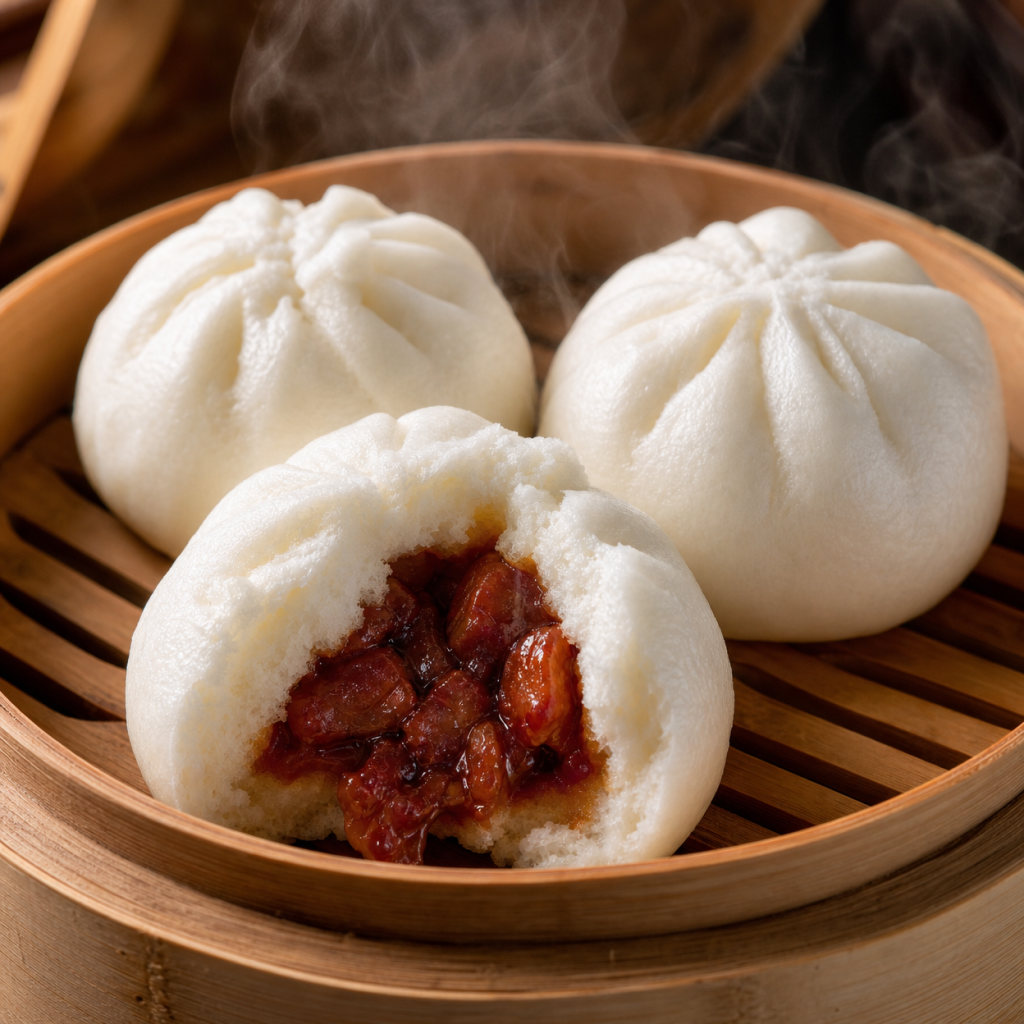
Char Siu Bao (叉燒包) translates literally from Cantonese to “BBQ pork bun.” The beautiful simplicity of the name tells you almost everything you need to know about this classic dish: the soft, fluffy bao (bun) contains generous amounts of char siu (Chinese BBQ pork). But the simplicity of the name belies the considerable complexity of what goes into making a truly exceptional version. The bun dough must be perfectly balanced — leavened to exactly the right lightness, sweet enough to complement the savory filling without overpowering it, and tender enough to melt in the mouth. The char siu filling must be moist, richly glazed, deeply flavorful, and plentiful. And the steaming must be timed with absolute precision so the buns emerge from the steamer white, pillowy, and characteristically split beautifully at the top, revealing a tantalizing, attractive glimpse of the glistening, rich filling within. This split is not a mistake or a defect; it is a deliberate and prized feature of well-made Char Siu Bao, indicating that the dough has risen properly and the bun is ready to eat.
The Two Forms of Char Siu Bao
Before going further, it is important to distinguish clearly between the two main forms of Char Siu Bao, as they are quite different in texture, taste, and eating experience. The steamed version is the one most people picture when they think of this classic dish. Made with a yeasted dough that is soft, cloud-white, and slightly sweet, these buns are steamed for approximately twelve to fifteen minutes until they puff up dramatically and develop the characteristic, attractive split at the top. The exterior is smooth and silky, with a texture that yields gently and pleasantly when squeezed. This is the classic dim sum version — the one wheeled around on steaming carts and snatched up eagerly by hungry diners moments after it leaves the bustling kitchen. The baked version, known as Bou Siu Bao in Cantonese, features a slightly denser, more enriched dough that is coated with an egg wash and baked until gloriously golden brown, sometimes with a glossy honey glaze applied immediately after baking for extra shine and sweetness. While the baked version has its own devoted following and is popular in Hong Kong bakeries, the steamed version remains the true soul of the dim sum experience and the one most closely associated with traditional yum cha.
The Char Siu Filling: A Cantonese Masterpiece
Char siu itself — the star of the show, the glorious filling — is one of the most beloved preparations in all of Cantonese barbecue culture. Pork shoulder or pork loin is marinated for hours in a complex, aromatic mixture of hoisin sauce, soy sauce, oyster sauce, honey, Shaoxing wine, five-spice powder, and red fermented bean curd (the key ingredient responsible for the characteristic, appetizing reddish color). The pork is then roasted at high heat, basted repeatedly with the sticky, sweet-savory marinade, until caramelized, slightly charred at the edges, and intensely sweet-savory throughout. For the Char Siu Bao filling, the roasted pork is finely chopped and combined with a thickened sauce made from the roasting drippings and additional oyster sauce and soy sauce, reduced until glossy and sticky. This sauce acts as both the binder and the flavor delivery vehicle — it coats every single piece of pork perfectly and keeps the filling beautifully moist during steaming. The ratio of pork to sauce in the filling is absolutely critical: too dry and the filling is disappointing and crumbly; too wet and it will soak through the delicate bun, making it soggy.
Making the Bun Dough
The bun dough for steamed Char Siu Bao is a lightly sweetened yeast dough enriched with a small amount of lard or vegetable shortening for tenderness and flavor. The dough is made with a combination of all-purpose flour and a small amount of cake flour or low-protein flour to achieve the characteristic soft, pillowy, cloud-like texture. Baking powder is added in addition to yeast to ensure the buns rise high and split properly at the top during steaming. The dough is kneaded until smooth and satiny, then allowed to proof until doubled in size. Individual pieces of dough are then rolled into discs, filled with the prepared char siu mixture, carefully gathered and pleated shut, and placed on small squares of parchment paper seam-side up. As the buns steam, the intense, moist heat causes the dough to expand rapidly, splitting open at the pleated top to reveal a perfect hint of the glistening, aromatic filling within. This moment of revelation is one of the great small pleasures of dim sum dining.
The Cultural Significance of Char Siu Bao
Char Siu Bao occupies a truly special, irreplaceable place in the emotional landscape of Chinese food culture. For countless people of Cantonese heritage around the world, these buns are inseparable from cherished childhood memories of weekend dim sum with family, of grandparents patiently teaching the art of bao-making, and of the specific warmth and joyful bustle of a good Cantonese teahouse. The buns are simultaneously humble and extraordinary — a simple street food elevated through centuries of refinement into something that brings genuine, uncomplicated joy to millions. In Hong Kong, Char Siu Bao has become a cultural shorthand for Cantonese identity itself. It appears on famous food maps, in beloved films and television dramas, and in the hands of visitors who have traveled thousands of miles specifically to taste the real thing. Whether you are enjoying them in a bustling Hong Kong tea house or making them at home, Char Siu Bao offers a taste of comfort, tradition, family, and pure deliciousness that is simply unmatched.
The Global Popularity of Dim Sum Culture
Over the past several decades, dim sum has expanded far beyond Southern China and Hong Kong, becoming one of the most internationally recognized forms of Chinese cuisine. Restaurants specializing in dim sum can now be found in major cities all around the world, from New York and Los Angeles to London, Sydney, Singapore, and Toronto. The appeal of dim sum comes from its social nature, incredible variety, and balance of flavors and textures. Diners are encouraged to share multiple dishes, sample different combinations, and enjoy a relaxed dining experience with friends and family. This sense of togetherness has helped dim sum become much more than a meal — it is a cultural experience that people return to repeatedly.
Traditional dim sum meals are usually enjoyed during brunch or lunchtime, often accompanied by hot Chinese tea. The phrase “yum cha,” which means “drink tea” in Cantonese, reflects the deep connection between tea culture and dim sum dining. Different teas are paired with different dishes to balance richness and refresh the palate. Jasmine tea, pu-erh tea, chrysanthemum tea, and oolong tea are among the most popular choices in classic Cantonese teahouses. The tea not only complements the flavors of the food but also encourages conversation and a slower, more enjoyable dining pace.
Why Authentic Preparation Matters
Authentic dim sum preparation requires patience, precision, and years of experience. Skilled chefs spend years perfecting dough textures, fillings, steaming times, seasoning balances, and presentation techniques. Even a seemingly simple dumpling or bun can involve dozens of small details that determine whether the final result is average or exceptional. High-quality ingredients also play a critical role. Fresh seafood, carefully selected meats, premium soy sauce, sesame oil, and aromatic spices all contribute to the depth of flavor that defines authentic Cantonese cooking.
In many respected dim sum restaurants, recipes are passed down through generations of chefs and families. These traditions preserve techniques that have been refined over hundreds of years. While modern restaurants may experiment with fusion ingredients and contemporary presentation styles, the classic foundations of Cantonese dim sum remain timeless. Diners continue to appreciate dishes that honor tradition while delivering comfort, freshness, and carefully balanced flavor profiles.
Dim Sum as a Shared Experience
One of the greatest reasons dim sum remains beloved worldwide is its ability to bring people together. Families gather around round tables, friends share bamboo steamers filled with freshly prepared dishes, and conversations flow naturally throughout the meal. Unlike individual plated dining experiences, dim sum encourages sharing and interaction. Every dish placed at the center of the table becomes part of a collective experience that creates memories as meaningful as the food itself.
Whether enjoyed at a luxurious Hong Kong tea house or a small neighborhood restaurant, classic dim sum dishes continue to represent warmth, hospitality, and culinary craftsmanship. Their enduring popularity proves that carefully prepared comfort food never goes out of style. For food lovers everywhere, exploring authentic dim sum remains one of the most rewarding journeys in the world of Chinese cuisine.
