Post
Perfect Longevity Noodles 2026: The Cultural Significance and Flavor of Yi Mian at Every Celebration
May
Longevity Noodles: The Cultural Significance and Flavor of Yi Mian at Every Celebration
Food and profound meaning have always been inseparable, intertwined in Chinese culture, and nowhere is this beautiful, meaningful relationship more vividly, deliciously expressed than in the cherished tradition of longevity noodles. In Chinese culinary symbolism, the length of a long noodle represents the hoped-for length of a long, healthy life — and to cut a noodle before eating it is to tempt fate, to invite misfortune, with a shortened, broken existence.
This powerful, deeply held belief has made long, unbroken noodles a cherished centerpiece of Chinese birthday celebrations, joyful Lunar New Year feasts, weddings, and any occasion where good fortune, happiness, and long life are wished upon the honored guest. Eating longevity noodles is an act of hope, love, and tradition.
What Are Yi Mian (E-Fu Noodles)?
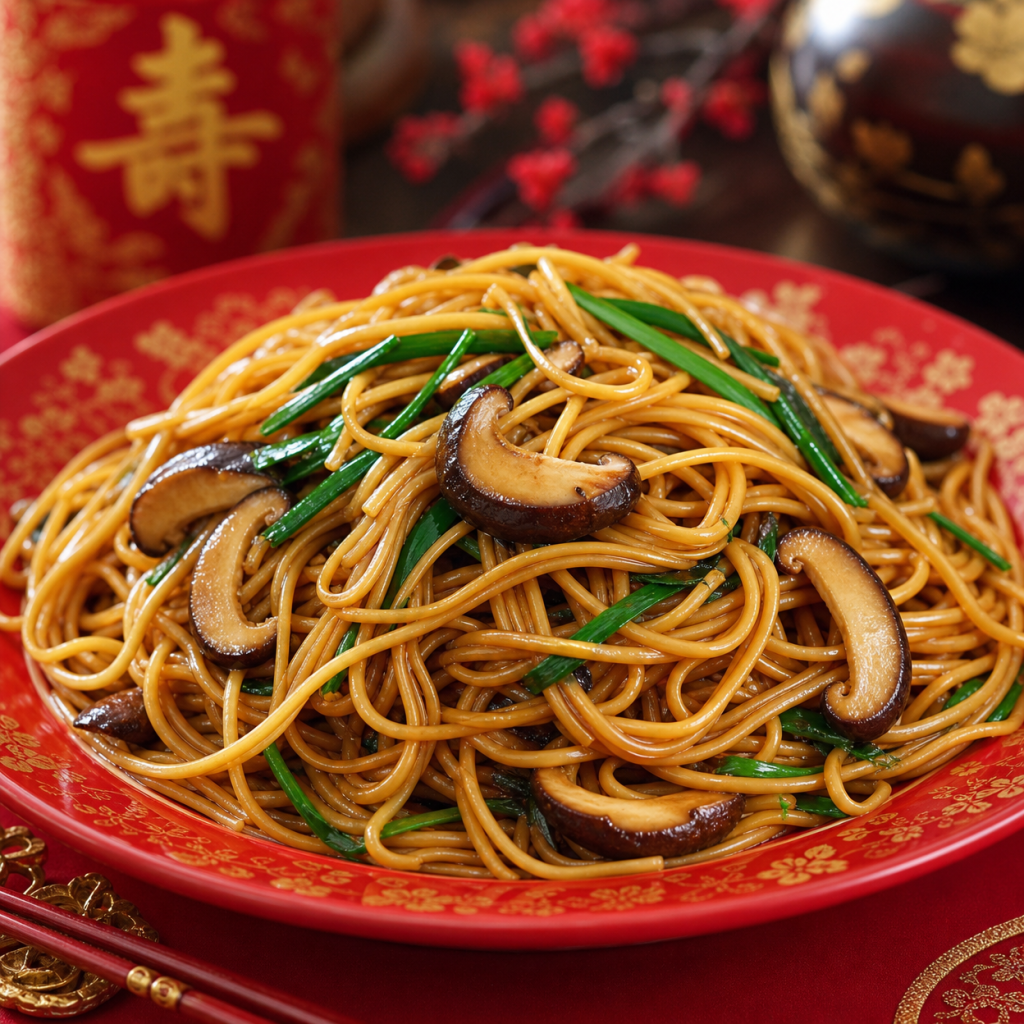
Yi Mian (伊麵), also called e-fu noodles or longevity noodles, are a type of pre-fried, dehydrated, round noodle made from wheat flour and egg. Unlike any other noodle type, yi mian are manufactured by deep-frying fresh, raw noodles until golden, crisp, and then carefully drying them — a unique process that creates a noodle with a uniquely porous, sponge-like texture that can absorb large, generous quantities of flavorful liquid without disintegrating or becoming mushy. This remarkable, prized absorbency makes yi mian absolutely ideal for braising, which is their primary, traditional cooking method.
The name is charmingly said to derive from Yi Binglou, a Qing Dynasty official whose clever cook invented the noodle, though like many charming food origin stories this attribution is difficult to verify with certainty. What is certain, undisputed is that yi mian became the standard, beloved choice for celebratory noodle dishes in Cantonese cuisine, their satisfying round shape evoking the completeness, unity, and continuity appropriate for happy, festive occasions.
The Braising Technique
The cooking of Longevity Noodles differs fundamentally, dramatically from boiling or stir-frying other noodle types. The pre-fried, crisp noodles are placed in a wok or pot with a generous, ample amount of braising liquid — typically rich chicken stock enriched with oyster sauce, soy sauce, dark soy sauce, and a small amount of sugar — and cooked gently over medium heat, turning the noodles carefully and spooning liquid over them as they absorb it.
The noodles slowly swell as they absorb the flavorful liquid, becoming glossy, deeply flavored, silky, and incredibly satisfying in texture. The finishing sauce should be thick enough to coat the noodles attractively without being so thick that it becomes gummy, heavy, or pasty. A small amount of cornstarch slurry is sometimes added to achieve the perfect, ideal consistency — a glossy, just-clinging, velvety sauce that makes each noodle glisten beautifully under the light.
Traditional Toppings and Additions
Longevity Noodles is most commonly, traditionally served with a beautiful combination of shiitake mushrooms, wood ear fungi, dried lily buds, and sometimes glass noodles braised together in the same fragrant, rich sauce. The earthy, umami-rich mushrooms contribute an earthy depth that complements the wheat noodles beautifully, while the wood ear fungi add a pleasant, slightly crunchy, contrasting texture.
Some luxurious, celebratory versions include dried scallops (conpoy), the holy grail ingredient of Cantonese celebratory cooking, whose intense, concentrated, oceanic seafood flavor elevates the dish dramatically, memorably. This is food fit for a celebration.
The Birthday Tradition
At joyful Chinese birthday celebrations, longevity noodles are served as a course in their own right, with ceremony and respect — not as a humble side dish or accompaniment, but as the meaningful, symbolic, delicious centerpiece of the entire meal. The honored birthday person is typically served the beautiful noodles first, and the long noodles must be carefully transferred from the serving dish to the bowl without breaking — using chopsticks to carefully, respectfully lift and lower the long, unbroken strands without snapping them.
The mindful act of eating the long noodles as they are, without cutting them, is itself a powerful, meaningful ritual affirmation of the heartfelt wish for a long, healthy, happy life. In some family traditions, the longest single noodle is specially identified and the birthday person makes a special effort to eat it without breaking it, as a sign of respect for tradition and hope for the future. In others, the entire serving of noodles is consumed as a single, unbroken mass — a feat that requires patience, skill with chopsticks, and carries maximum symbolic, meaningful significance. It is a beautiful, delicious tradition.
Longevity Noodles in Modern Cantonese Cuisine
Contemporary, creative Cantonese chefs have elevated yi mian to appear on fine dining, upscale menus, incorporating luxurious, premium ingredients such as whole abalone, lobster, crab, and dried scallops. The noodle’s inherent, remarkable ability to absorb and carry flavor makes it an ideal, perfect partner for richly flavored premium ingredients — the braising liquid from a pot of precious abalone, for instance, creates an extraordinary, unforgettable yi mian that carries all the complexity, depth, and prestige of the primary ingredient.
Despite these upscale, luxurious interpretations, yi mian remains at heart a celebratory, humble family dish — a beloved food that brings generations together around the table and connects the present moment to the accumulated traditions, beliefs, and hopes of Chinese culinary culture. Eating longevity noodles is an act of love, memory, and hope for the future.
The Global Popularity of Dim Sum Culture
Over the past several decades, dim sum has expanded far beyond Southern China and Hong Kong, becoming one of the most internationally recognized forms of Chinese cuisine. Restaurants specializing in dim sum can now be found in major cities all around the world, from New York and Los Angeles to London, Sydney, Singapore, and Toronto. The appeal of dim sum comes from its social nature, incredible variety, and balance of flavors and textures. Diners are encouraged to share multiple dishes, sample different combinations, and enjoy a relaxed dining experience with friends and family. This sense of togetherness has helped dim sum become much more than a meal — it is a cultural experience that people return to repeatedly.
Traditional dim sum meals are usually enjoyed during brunch or lunchtime, often accompanied by hot Chinese tea. The phrase “yum cha,” which means “drink tea” in Cantonese, reflects the deep connection between tea culture and dim sum dining. Different teas are paired with different dishes to balance richness and refresh the palate. Jasmine tea, pu-erh tea, chrysanthemum tea, and oolong tea are among the most popular choices in classic Cantonese teahouses. The tea not only complements the flavors of the food but also encourages conversation and a slower, more enjoyable dining pace.
Why Authentic Preparation Matters
Authentic dim sum preparation requires patience, precision, and years of experience. Skilled chefs spend years perfecting dough textures, fillings, steaming times, seasoning balances, and presentation techniques. Even a seemingly simple dumpling or bun can involve dozens of small details that determine whether the final result is average or exceptional. High-quality ingredients also play a critical role. Fresh seafood, carefully selected meats, premium soy sauce, sesame oil, and aromatic spices all contribute to the depth of flavor that defines authentic Cantonese cooking.
In many respected dim sum restaurants, recipes are passed down through generations of chefs and families. These traditions preserve techniques that have been refined over hundreds of years. While modern restaurants may experiment with fusion ingredients and contemporary presentation styles, the classic foundations of Cantonese dim sum remain timeless. Diners continue to appreciate dishes that honor tradition while delivering comfort, freshness, and carefully balanced flavor profiles.
Dim Sum as a Shared Experience
One of the greatest reasons dim sum remains beloved worldwide is its ability to bring people together. Families gather around round tables, friends share bamboo steamers filled with freshly prepared dishes, and conversations flow naturally throughout the meal. Unlike individual plated dining experiences, dim sum encourages sharing and interaction. Every dish placed at the center of the table becomes part of a collective experience that creates memories as meaningful as the food itself.
Whether enjoyed at a luxurious Hong Kong tea house or a small neighborhood restaurant, classic dim sum dishes continue to represent warmth, hospitality, and culinary craftsmanship. Their enduring popularity proves that carefully prepared comfort food never goes out of style. For food lovers everywhere, exploring authentic dim sum remains one of the most rewarding journeys in the world of Chinese cuisine.
