Post
Best Dan Dan Noodles 2026: Exploring the Fiery Soul of Sichuan Street Food Culture
May
Dan Dan Noodles: Exploring the Fiery Soul of Sichuan Street Food Culture
Of all the iconic, beloved dishes to emerge from the fiery, complex, deeply aromatic culinary tradition of Sichuan province, Dan Dan Noodles may be the one that most perfectly encapsulates the spirit, soul, and character of Sichuan cooking in a single bowl. Spicy, numbing, savory, slightly sour, richly nutty, deeply aromatic, and utterly addictive — Dan Dan Mian (擔擔麵) is a dish of extraordinary, remarkable complexity packed into what appears, at first glance, to be a simple, humble noodle preparation.
Once you have eaten authentic, properly made Dan Dan Noodles, you understand exactly why Sichuan cuisine has conquered the taste buds of the world, from Chengdu to New York to London to Tokyo. This is not a subtle or timid dish; it is bold, assertive, challenging, and deeply rewarding. It demands your attention and rewards it with flavors that are genuinely unlike anything else on earth.
What Are Dan Dan Noodles?
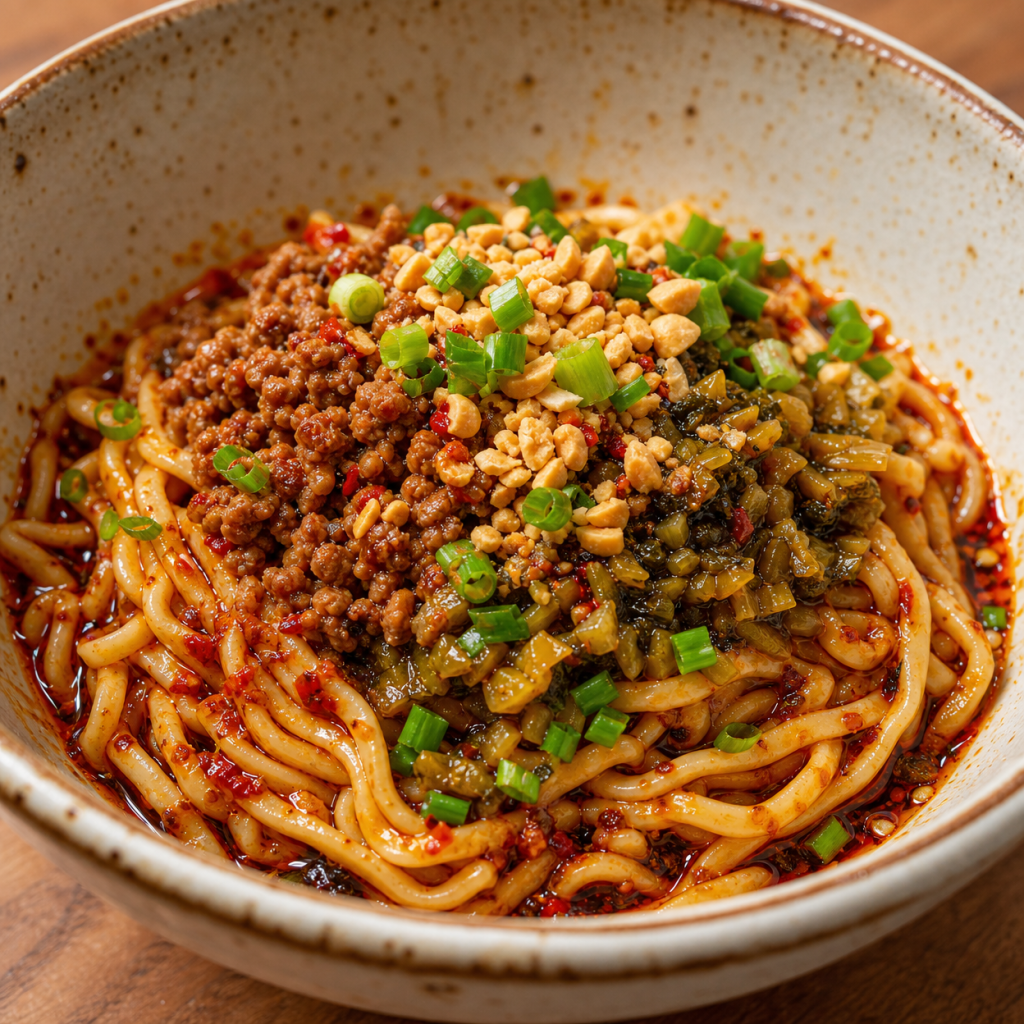
Dan Dan Noodles are thin, wheat-based noodles served in a small amount of chili oil-based, intensely flavorful sauce, topped with a generous amount of ground pork cooked with ya cai (Yibin preserved vegetables), and garnished with ground roasted peanuts, chopped fresh scallions, and additional chili oil.
The name “dan dan” comes from the carrying pole (dan) that street vendors in old Chengdu historically used to balance two buckets — one containing the fresh noodles and one containing the sauce and toppings — as they walked through the crowded city streets selling the dish to hungry passersby. This portable, efficient system allowed vendors to serve hot, fresh noodles anywhere, and the dish quickly became a beloved staple of Chengdu street food culture. The sound of vendors calling out “dan dan mian!” is still remembered fondly by older generations of Sichuanese.
The Origins: Street Food Royalty
Dan Dan Noodles originated as a humble, accessible, affordable street food in Chengdu during the Qing Dynasty. The traditional, old-school vendor version was simpler, more rustic than most modern restaurant interpretations — thin noodles, a small amount of sesame paste, chili oil, soy sauce, and preserved vegetables, eaten quickly while standing, often from a simple bowl with chopsticks. The dish was cheap, filling, intensely flavorful, and perfectly portable — everything a great street food should be. As Sichuan cuisine spread globally throughout the 20th and 21st centuries, carried by immigrants and embraced by adventurous diners, Dan Dan Noodles traveled with it, undergoing various adaptations and interpretations along the way.
In some Chinese-American contexts, the dish became heavier, sweeter, and milder — larger portions, more sauce, sometimes a broth added to make it soupier. In Japan, a popular, beloved variation called Tan Tan Men features a rich, creamy sesame and chili broth that is quite different from the original, dry Chengdu street food version. The classic, original dry Chengdu street food version, however, remains the purest, most authentic expression of what Dan Dan Noodles are truly meant to be.
The Ma La Flavor Profile
To truly understand and appreciate Dan Dan Noodles, you must first understand ma la — the defining, essential flavor principle of Sichuan cuisine. Ma refers to the tingling, buzzing, numbing sensation caused by Sichuan peppercorns (hua jiao), which contain a remarkable compound called hydroxy-alpha sanshool that literally, physically numbs the tongue and lips, creating a unique, almost electric sensation. La refers to the spicy, burning heat of dried chili peppers and chili oil. Together, ma la creates a sensation that is unlike any other flavor experience in world cuisine — a tingling, buzzing, burning, numbing, complex, addictive heat that is simultaneously intense, challenging, and deeply pleasurable.
In Dan Dan Noodles, the ma la sensation is delivered primarily through ground, toasted Sichuan peppercorns and high-quality chili oil. The chili oil used in authentic, serious Dan Dan Noodles is not simply oil with dried chili flakes stirred in; it is a carefully, patiently made infusion of multiple types of dried chilies, Sichuan peppercorns, star anise, cassia cinnamon, black cardamom, and other aromatic spices, steeped in oil over low heat until deeply, complexly flavored and a brilliant, appetizing red color. The quality, aroma, and heat level of this chili oil is arguably the single most important factor in determining the quality of the finished dish.
The Sauce Components
The complex, layered sauce for Dan Dan Noodles is built from several essential, non-negotiable elements, each contributing a specific, important dimension of flavor to the final dish. Chinese sesame paste (made from roasted white sesame seeds) or peanut butter provides the creamy, nutty, rich backbone of the sauce. This ingredient smooths out the aggressive heat of the chili oil and adds a welcome richness that makes the sauce cling beautifully to the noodles.
Light soy sauce provides saltiness, depth, and umami, while Chinkiang black vinegar (a aged, aromatic black rice vinegar) adds a gentle, pleasant sourness and a slightly sweet, complex depth that lifts the entire sauce and prevents it from being one-dimensionally spicy or heavy. A finishing drizzle of toasted sesame oil and freshly minced raw garlic complete the aromatic, pungent profile of the sauce, adding toasty richness and sharp, clean pungency respectively. Some versions also include a small amount of sugar to balance the flavors.
The ground pork topping that crowns a bowl of Dan Dan Noodles is itself a revelatory, deeply flavorful preparation. Minced pork is stir-fried with doubanjiang (spicy fermented broad bean paste), dark soy sauce, Shaoxing wine, and the absolutely key, irreplaceable ingredient: ya cai — Yibin preserved vegetables. These fermented, slightly sour, intensely savory mustard green stems are chopped finely and cooked with the pork until the meat is deeply seasoned, aromatic, and slightly caramelized. The ya cai contributes a funky, savory, slightly sour, deeply umami dimension that no other ingredient can replicate. Without ya cai, a dish may be tasty, but it is not truly Dan Dan Noodles.
Assembling the Perfect Bowl
The assembly of Dan Dan Noodles is a deliberate, precise, almost ritualistic act. The sauce mixture is placed in the serving bowl first, followed by the freshly cooked and well-drained noodles. The ground pork topping is added generously, along with ground roasted peanuts and chopped fresh scallions.
The final, dramatic drizzle of additional chili oil is applied at the very end, and the bowl is presented to the diner with great anticipation — the diner then mixes everything together thoroughly, lovingly before eating, ensuring that every single strand of noodle is coated with the complex, aromatic sauce and every bite contains a little bit of everything. The eating experience is a journey: first the aroma hits you, then the heat, then the numbing, then the rich, nutty, savory depth, and finally the satisfying chew of the noodles. It is a dish that engages all the senses simultaneously and leaves you craving more.
The Global Popularity of Dim Sum Culture
Over the past several decades, dim sum has expanded far beyond Southern China and Hong Kong, becoming one of the most internationally recognized forms of Chinese cuisine. Restaurants specializing in dim sum can now be found in major cities all around the world, from New York and Los Angeles to London, Sydney, Singapore, and Toronto. The appeal of dim sum comes from its social nature, incredible variety, and balance of flavors and textures. Diners are encouraged to share multiple dishes, sample different combinations, and enjoy a relaxed dining experience with friends and family. This sense of togetherness has helped dim sum become much more than a meal — it is a cultural experience that people return to repeatedly.
Traditional dim sum meals are usually enjoyed during brunch or lunchtime, often accompanied by hot Chinese tea. The phrase “yum cha,” which means “drink tea” in Cantonese, reflects the deep connection between tea culture and dim sum dining. Different teas are paired with different dishes to balance richness and refresh the palate. Jasmine tea, pu-erh tea, chrysanthemum tea, and oolong tea are among the most popular choices in classic Cantonese teahouses. The tea not only complements the flavors of the food but also encourages conversation and a slower, more enjoyable dining pace.
Why Authentic Preparation Matters
Authentic dim sum preparation requires patience, precision, and years of experience. Skilled chefs spend years perfecting dough textures, fillings, steaming times, seasoning balances, and presentation techniques. Even a seemingly simple dumpling or bun can involve dozens of small details that determine whether the final result is average or exceptional. High-quality ingredients also play a critical role. Fresh seafood, carefully selected meats, premium soy sauce, sesame oil, and aromatic spices all contribute to the depth of flavor that defines authentic Cantonese cooking.
In many respected dim sum restaurants, recipes are passed down through generations of chefs and families. These traditions preserve techniques that have been refined over hundreds of years. While modern restaurants may experiment with fusion ingredients and contemporary presentation styles, the classic foundations of Cantonese dim sum remain timeless. Diners continue to appreciate dishes that honor tradition while delivering comfort, freshness, and carefully balanced flavor profiles.
Dim Sum as a Shared Experience
One of the greatest reasons dim sum remains beloved worldwide is its ability to bring people together. Families gather around round tables, friends share bamboo steamers filled with freshly prepared dishes, and conversations flow naturally throughout the meal. Unlike individual plated dining experiences, dim sum encourages sharing and interaction. Every dish placed at the center of the table becomes part of a collective experience that creates memories as meaningful as the food itself.
Whether enjoyed at a luxurious Hong Kong tea house or a small neighborhood restaurant, classic dim sum dishes continue to represent warmth, hospitality, and culinary craftsmanship. Their enduring popularity proves that carefully prepared comfort food never goes out of style. For food lovers everywhere, exploring authentic dim sum remains one of the most rewarding journeys in the world of Chinese cuisine.
