
Post
Best Jin Deui Sesame Balls 2026: The Ancient Chinese Fried Treat That’s Stood the Test of Time
May
Jin Deui Sesame Balls: The Ancient Chinese Fried Treat That’s Stood the Test of Time
There are few foods in the entire, vast Chinese culinary canon that deliver as much pure, unadulterated, childlike joy per bite as Jin Deui — the humble, golden sesame ball. These golden, crunchy, chewy, delightful orbs of deep-fried glutinous rice, beautifully encrusted with toasted, fragrant sesame seeds and filled with smooth, sweet, luscious paste, have been delighting Chinese diners of all ages for over a thousand years.
They are simultaneously a beloved, nostalgic street food, a festive Lunar New Year treat, a dim sum staple, and a comforting childhood memory for millions of people across generations. Beloved across generations and geographies with a consistency and devotion that speaks to something genuinely universal and timeless in their appeal, sesame balls are a true, undisputed treasure of Chinese cuisine. They are the kind of food that makes you smile before you even take the first bite.
What Are Jin Deui?
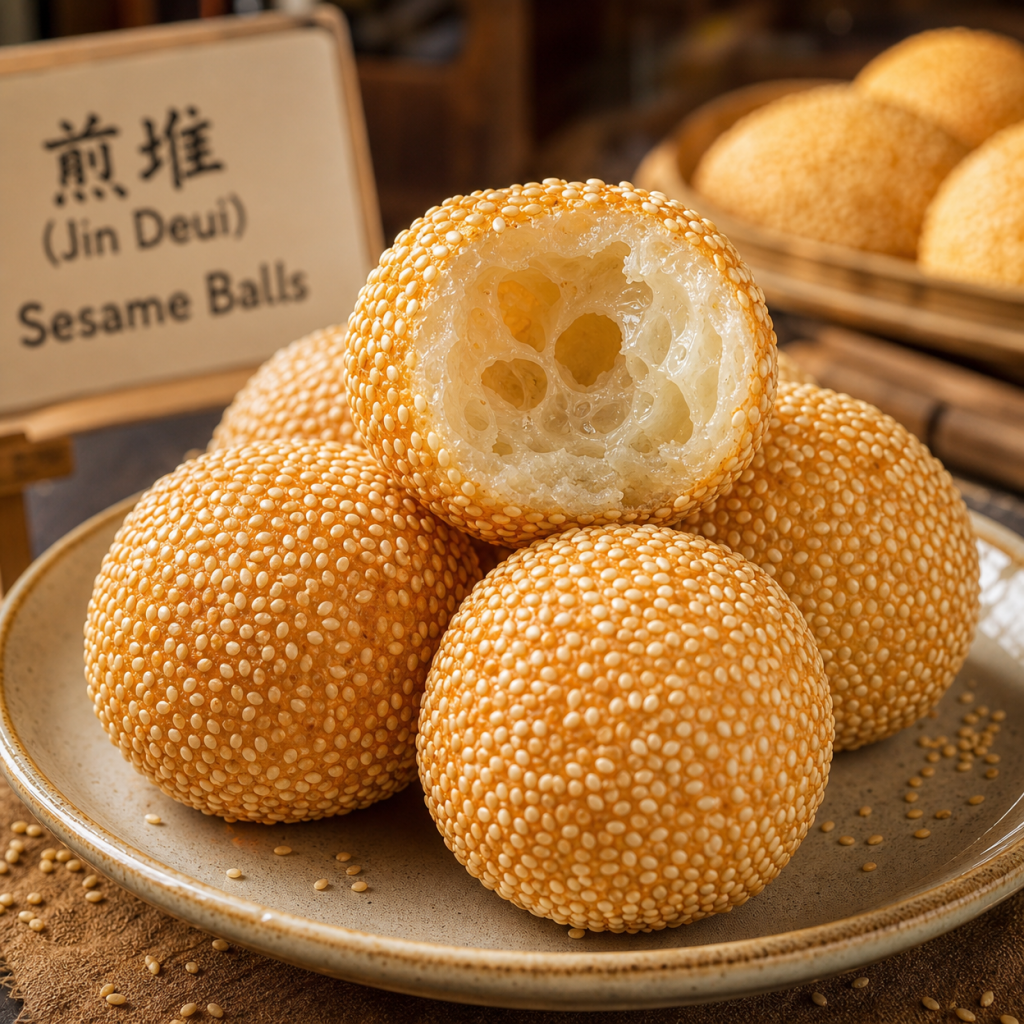
Jin Deui (煎堆), also known as sesame balls, are a type of Chinese fried pastry made from glutinous rice flour dough. The soft, pliable, slightly sticky dough is skillfully shaped into balls, filled generously with sweet paste — typically lotus seed paste, red bean paste, or black sesame paste — rolled generously in white sesame seeds, and deep-fried until gloriously, beautifully golden brown and puffed.
The finished sesame ball is wonderfully crispy on the outside from the fried, toasted, fragrant sesame seeds, delightfully chewy, soft, and satisfying in the middle from the glutinous rice dough, and smooth, sweet, luscious, and luxurious at the very center from the rich, flavorful filling. It is a textural and flavor journey in every single, wonderful bite — crispy, then chewy, then creamy and sweet.
A History of More Than a Thousand Years
The remarkable, fascinating history of sesame balls stretches all the way back to the Tang Dynasty, when historical records describe a food called ludui being consumed at lavish, elaborate imperial banquets. These early sesame balls were likely simpler in form than their modern, refined descendants — perhaps just glutinous rice dough coated in sesame seeds and fried — but the fundamental, brilliant, enduring concept of combining glutinous rice with sesame and deep-frying was established very early in Chinese culinary history.
The dish spread from northern China southward over the centuries and was enthusiastically, lovingly adopted into Cantonese cuisine, where it became a beloved dim sum staple and a traditional Lunar New Year festival food. The perfectly, satisfyingly round shape of the sesame ball — symbolizing completeness, unity, family togetherness, and the full moon — made it an ideal, meaningful food for celebrations of all kinds, and it has remained associated with festivity, family, good fortune, and happiness ever since.
The Glutinous Rice Dough
The dough for Jin Deui is made from glutinous rice flour, also called sweet rice flour, mixed with boiling water and a small amount of sugar and lard or vegetable shortening. The boiling water is absolutely essential — it partially cooks the starch immediately, creating a dough that is soft, pliable, smooth, and slightly tacky, very similar in texture to Japanese mochi dough. Working with glutinous rice dough requires a light, gentle, patient touch; overworking develops an unpleasant, gummy, tough texture, while underworking leaves the dough too fragile, weak, and prone to tearing to fill and shape without breaking.
The key characteristic of glutinous rice flour is its high amylopectin starch content, which creates the characteristic chewy, slightly stretchy, deeply satisfying, delightful texture that is the hallmark of a great sesame ball. When fried properly, the exterior of the dough crisps beautifully, shatteringly while the interior miraculously retains its soft, chewy, yielding character — the perfect, dramatic combination of textures that is the very essence of a great Jin Deui.
The Fillings: Lotus Seed, Red Bean, and Black Sesame
Perhaps the most prestigious, elegant, and classic of sesame ball fillings, lotus seed paste is made by cooking dried lotus seeds until soft, then blending them with sugar and oil into a smooth, fine-textured, elegant, refined paste. The flavor is mild, slightly sweet, and gently, pleasantly floral, with an refined, clean, delicate taste that suits the nutty, crispy exterior of the sesame ball perfectly. The most common, accessible, and beloved filling, red bean paste (made from azuki beans cooked with sugar until smooth) provides a heartier, earthier, more robust, familiar flavor than lotus paste.
It is the filling that most people encounter first in Jin Deui, and its reliable, comforting, familiar, satisfying sweetness makes it universally appealing to both children and adults. The most intensely flavored, dramatic, and aromatic of the three classic fillings, black sesame paste combines ground roasted black sesame seeds with sugar and oil into a deeply nutty, slightly bitter, complex, and extraordinarily aromatic paste. Biting into a sesame ball filled with warm, flowing black sesame paste releases an incredible, unforgettable aroma that is one of the most distinctive, memorable, and wonderful in all of Chinese dessert cooking.
The Frying Process: A Delicate Art
Frying Jin Deui correctly requires careful, attentive, patient temperature management. The sesame balls are placed in oil at a relatively moderate temperature — around 160 to 170 degrees Celsius (320 to 340 degrees Fahrenheit) — and fried slowly, gently, allowing the dough to heat through evenly and the air inside to expand gradually before the exterior sets and becomes rigid. As the temperature is slowly, carefully increased, the sesame balls puff dramatically, delightfully, sometimes doubling in size, as the steam inside expands the soft dough outward.
The balls must be gently, carefully pressed with a spider or slotted spoon during frying to ensure they remain perfectly, satisfyingly round and puff evenly on all sides. When properly, skillfully fried, Jin Deui emerge from the hot oil as perfectly round, gloriously, beautifully golden-brown spheres with a beautiful, appetizing coating of toasted, fragrant sesame seeds that crunch audibly and satisfyingly at the very first bite.
They are best eaten immediately while still hot, warm, and fresh from the fryer, when the dramatic, wonderful contrast between the crispy, shattering exterior, the chewy, soft middle shell, and the warm, flowing, luscious filling is at its most spectacular, memorable, and delightful. This is a timeless treat that has earned its place in culinary history.
The Global Popularity of Dim Sum Culture
Over the past several decades, dim sum has expanded far beyond Southern China and Hong Kong, becoming one of the most internationally recognized forms of Chinese cuisine. Restaurants specializing in dim sum can now be found in major cities all around the world, from New York and Los Angeles to London, Sydney, Singapore, and Toronto.
The appeal of dim sum comes from its social nature, incredible variety, and balance of flavors and textures. Diners are encouraged to share multiple dishes, sample different combinations, and enjoy a relaxed dining experience with friends and family. This sense of togetherness has helped dim sum become much more than a meal — it is a cultural experience that people return to repeatedly.
Traditional dim sum meals are usually enjoyed during brunch or lunchtime, often accompanied by hot Chinese tea. The phrase “yum cha,” which means “drink tea” in Cantonese, reflects the deep connection between tea culture and dim sum dining. Different teas are paired with different dishes to balance richness and refresh the palate.
Jasmine tea, pu-erh tea, chrysanthemum tea, and oolong tea are among the most popular choices in classic Cantonese teahouses. The tea not only complements the flavors of the food but also encourages conversation and a slower, more enjoyable dining pace.
Why Authentic Preparation Matters
Authentic dim sum preparation requires patience, precision, and years of experience. Skilled chefs spend years perfecting dough textures, fillings, steaming times, seasoning balances, and presentation techniques. Even a seemingly simple dumpling or bun can involve dozens of small details that determine whether the final result is average or exceptional.
High-quality ingredients also play a critical role. Fresh seafood, carefully selected meats, premium soy sauce, sesame oil, and aromatic spices all contribute to the depth of flavor that defines authentic Cantonese cooking.
In many respected dim sum restaurants, recipes are passed down through generations of chefs and families. These traditions preserve techniques that have been refined over hundreds of years. While modern restaurants may experiment with fusion ingredients and contemporary presentation styles, the classic foundations of Cantonese dim sum remain timeless. Diners continue to appreciate dishes that honor tradition while delivering comfort, freshness, and carefully balanced flavor profiles.
Dim Sum as a Shared Experience
One of the greatest reasons dim sum remains beloved worldwide is its ability to bring people together. Families gather around round tables, friends share bamboo steamers filled with freshly prepared dishes, and conversations flow naturally throughout the meal. Unlike individual plated dining experiences, dim sum encourages sharing and interaction. Every dish placed at the center of the table becomes part of a collective experience that creates memories as meaningful as the food itself.
Whether enjoyed at a luxurious Hong Kong tea house or a small neighborhood restaurant, classic dim sum dishes continue to represent warmth, hospitality, and culinary craftsmanship. Their enduring popularity proves that carefully prepared comfort food never goes out of style. For food lovers everywhere, exploring authentic dim sum remains one of the most rewarding journeys in the world of Chinese cuisine.
