
Post
Best Steamed Fish with Ginger and Scallion 2026: The Purest Expression of Cantonese Cooking
May
Steamed Fish with Ginger and Scallion: The Purest Expression of Cantonese Cooking
In Cantonese culinary philosophy, the greatest, highest compliment you can pay a precious ingredient is to cook it simply, respectfully — with just enough technique to reveal its natural, beautiful character and just enough gentle seasoning to highlight rather than mask or overwhelm its intrinsic, delicate flavor.
Steamed Fish with Ginger and Scallion is the most eloquent, beautiful, and perfect expression of this humble, profound philosophy in the entire Cantonese repertoire. With its spare, minimalist list of ingredients, its absolute demand for fresh seafood of the very highest possible quality, and its revelatory, inspiring simplicity of execution, this elegant, honest dish represents Chinese cooking at its most refined, most confident, and most truthful. It is the dish that separates the truly great restaurants from the merely good ones.
What Is Steamed Fish with Ginger and Scallion?
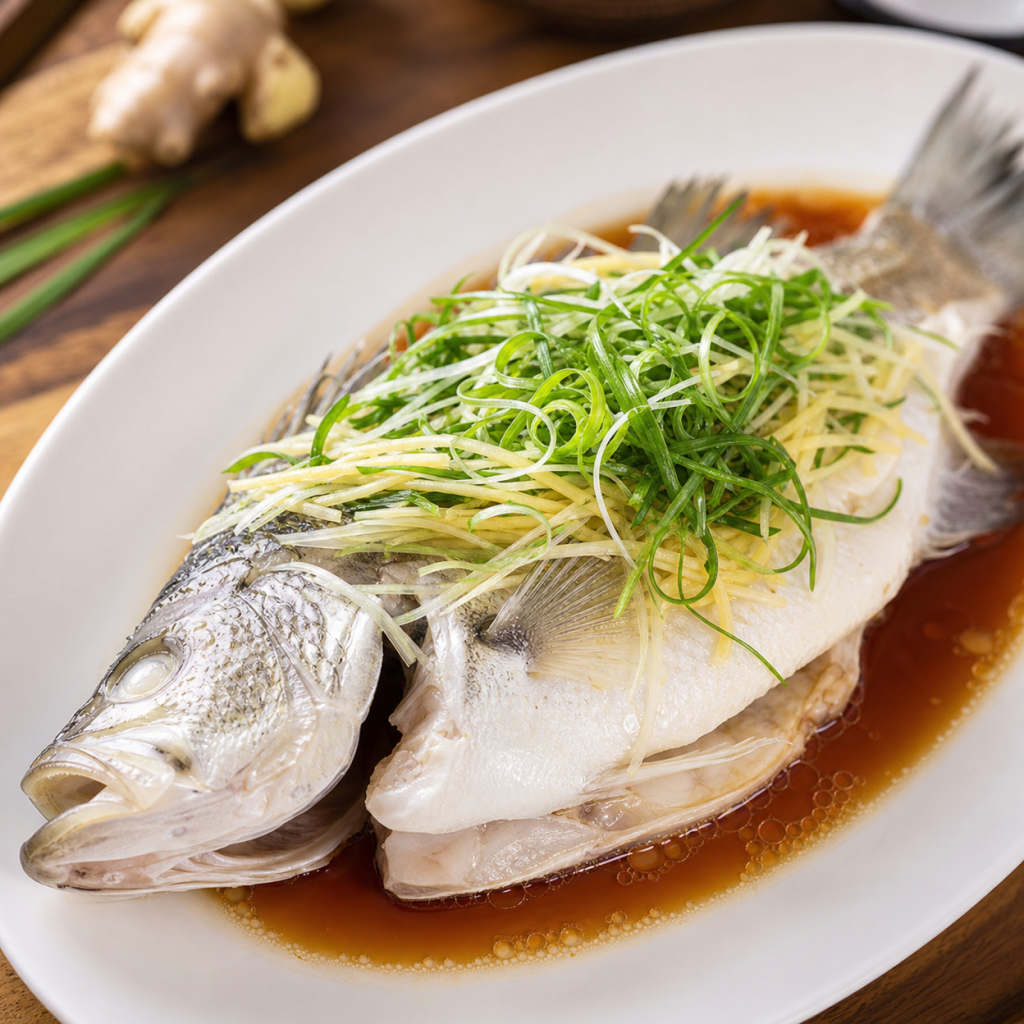
The beautifully simple dish is exactly what its honest, descriptive name suggests: a whole, fresh fish, seasoned lightly with fresh ginger and sometimes a small amount of light soy sauce, steamed gently over vigorously boiling water until just barely, perfectly cooked through, then finished dramatically at the table with a theatrical pour of boiling hot oil over a generous covering of fresh julienned ginger and scallions.
A simple, delicate sauce of light soy sauce, a touch of sugar, and fish stock or water is then poured carefully around the cooked fish. The entire, elegant preparation is designed with one single purpose: to honor the freshness, delicacy, and natural, beautiful flavor of the fish above all other considerations. There is nowhere to hide mediocre or old fish in this dish.
The Fish: Quality Is Everything
The careful choice of fish is the single most critical, important decision in making this elegant dish. Because the preparation is so minimal, so transparent, the natural quality and absolute freshness of the fish is completely, vulnerably exposed — there is no heavy seasoning, no thick sauce, no complex cooking technique to mask or compensate for inferior or old seafood.
In Hong Kong and Cantonese restaurants worldwide, the absolute gold standard is a live fish, still swimming, selected personally by the discerning diner from a tank, killed and cleaned immediately, mercifully before cooking. The most prized, expensive varieties for steaming include grouper (the most prestigious, expensive, and prized), sea bass (delicate, clean, and sweet), red snapper (sweeter with a slightly more robust, firm texture), and coral trout (beautifully colored and flavored). Each offers a different, wonderful texture and flavor profile — all are excellent when absolutely, unquestionably fresh.
The Hot Oil Technique: The Magic Moment
The dramatic application of boiling, shimmering hot oil to the fresh ginger and scallions arranged on the cooked fish is the defining, spectacular technique of this elegant dish — and one of the most visually, aromatically, and auditorily spectacular moments in all of Chinese cooking. After the fish has been steamed gently and any accumulated, cloudy liquid discarded, a generous, beautiful covering of julienned fresh ginger and scallions is arranged artfully across the entire length of the glistening fish.
A small amount of high-quality oil — typically two to three tablespoons — is heated in a ladle or small pot until it is just beginning to shimmer and smoke, then poured rapidly, dramatically across the fish and aromatics from head to tail. The magnificent sound that results — a dramatic, extended, satisfying sizzle as the hot oil hits the fresh aromatics and the delicate fish skin — is one of the great, beloved auditory pleasures of refined Chinese dining.
The intense, focused heat of the oil instantaneously, perfectly cooks the raw ginger and scallions, releasing their aromatic compounds dramatically and causing them to perfume the entire room. Diners seated nearby often look up instinctively, smiling, at the wonderful sound and intoxicating smell of this magical moment.
The Timing: Precision Is Essential
Steamed Fish with Ginger and Scallion a whole, delicate fish correctly requires precise, careful timing that depends on the size, thickness, and density of the particular fish. The general, reliable rule is eight minutes per kilogram of fish weight, with an additional two minutes for every subsequent 500 grams. For a standard, restaurant-sized fish of approximately 500 to 700 grams, gentle steaming time is typically eight to ten minutes. The reliable test for perfect doneness is inserting a chopstick or thin skewer into the thickest part of the flesh, just behind the gill plate.
If the chopstick passes through with no resistance, smoothly, the fish is perfectly cooked. If it encounters any firmness or the flesh appears slightly translucent, additional, brief steaming time is needed. Oversteamed fish — rubbery, dry, tough, and with flesh that tears rather than flakes beautifully — is one of the great, sad culinary disappointments, which is why precise, careful timing matters so enormously.
Cultural and Symbolic Significance
In rich Chinese culture, whole, beautiful fish carry profound, ancient symbolic significance. A whole fish presented reverently at a banquet or family meal represents completeness, abundance, prosperity, and good fortune. At joyous Lunar New Year celebrations, a whole, beautiful steamed fish is one of the mandatory, essential dishes on the festive table, powerfully symbolizing the sincere wish that the family will have more than enough, surplus, and abundance in the coming year. The fish is traditionally served with the head pointing respectfully toward the most honored guest — a meaningful gesture of respect, honor, and warm welcome.
The precious bones and head are never discarded at the table without being tasted — the tender flesh around the cheeks and collar of the fish is considered particularly sweet, flavorful, and prized, and experienced, knowledgeable diners know to seek these choice parts out. Eating a whole, steamed fish with chopsticks, carefully, respectfully navigating around the delicate bones while savoring every piece of precious flesh, is itself a valued, cultivated skill that is appreciated in Chinese dining culture.
The Global Popularity of Dim Sum Culture: Steamed Fish with Ginger and Scallion
Over the past several decades, dim sum has expanded far beyond Southern China and Hong Kong, becoming one of the most internationally recognized forms of Chinese cuisine. Restaurants specializing in dim sum can now be found in major cities all around the world, from New York and Los Angeles to London, Sydney, Singapore, and Toronto.
The appeal of dim sum comes from its social nature, incredible variety, and balance of flavors and textures. Diners are encouraged to share multiple dishes, sample different combinations, and enjoy a relaxed dining experience with friends and family. This sense of togetherness has helped dim sum become much more than a meal — it is a cultural experience that people return to repeatedly.
Traditional dim sum meals are usually enjoyed during brunch or lunchtime, often accompanied by hot Chinese tea. The phrase “yum cha,” which means “drink tea” in Cantonese, reflects the deep connection between tea culture and dim sum dining. Different teas are paired with different dishes to balance richness and refresh the palate.
Jasmine tea, pu-erh tea, chrysanthemum tea, and oolong tea are among the most popular choices in classic Cantonese teahouses. The tea not only complements the flavors of the food but also encourages conversation and a slower, more enjoyable dining pace.
Why Authentic Preparation Matters: Steamed Fish with Ginger and Scallion
Authentic dim sum preparation requires patience, precision, and years of experience. Skilled chefs spend years perfecting dough textures, fillings, steaming times, seasoning balances, and presentation techniques. Even a seemingly simple dumpling or bun can involve dozens of small details that determine whether the final result is average or exceptional. High-quality ingredients also play a critical role. Fresh seafood, carefully selected meats, premium soy sauce, sesame oil, and aromatic spices all contribute to the depth of flavor that defines authentic Cantonese cooking.
In many respected dim sum restaurants, recipes are passed down through generations of chefs and families. These traditions preserve techniques that have been refined over hundreds of years. While modern restaurants may experiment with fusion ingredients and contemporary presentation styles, the classic foundations of Cantonese dim sum remain timeless. Diners continue to appreciate dishes that honor tradition while delivering comfort, freshness, and carefully balanced flavor profiles.
Dim Sum as a Shared Experience: Steamed Fish with Ginger and Scallion
One of the greatest reasons dim sum remains beloved worldwide is its ability to bring people together. Families gather around round tables, friends share bamboo steamers filled with freshly prepared dishes, and conversations flow naturally throughout the meal. Unlike individual plated dining experiences, dim sum encourages sharing and interaction. Every dish placed at the center of the table becomes part of a collective experience that creates memories as meaningful as the food itself.
Whether enjoyed at a luxurious Hong Kong tea house or a small neighborhood restaurant, classic dim sum dishes continue to represent warmth, hospitality, and culinary craftsmanship. Their enduring popularity proves that carefully prepared comfort food never goes out of style. For food lovers everywhere, exploring authentic dim sum remains one of the most rewarding journeys in the world of Chinese cuisine.
Steamed Fish with Ginger and Scallion
