Post
Mapo Tofu: Why Sichuan’s Fiery Tofu Dish Is One of the Most Addictive Foods on Earth
May
Mapo Tofu: Why Sichuan’s Fiery Tofu Dish Is One of the Most Addictive Foods on Earth
There is a specific, unforgettable moment when eating Mapo Tofu — somewhere between the first, shocking, exhilarating burst of chili heat and the gradual, pleasant spread of tingling numbness from the Sichuan peppercorns, as the impossibly silky, delicate tofu melts against your tongue and the complex, layered, aromatic, savory sauce seeps into every corner of your awareness — when you understand exactly, profoundly why this humble, brilliant dish has been captivating, delighting, and challenging diners for over a century and a half.
Mapo Tofu (麻婆豆腐) is not gentle, timid, or subtle food. It is not quiet or shy food. It is bold, assertive, challenging, exciting food that demands your full, focused attention and rewards it generously with complex, layered flavors that are genuinely, unforgettable unlike anything else on earth. It is addictive in the very best sense of the word.
What Is Mapo Tofu?
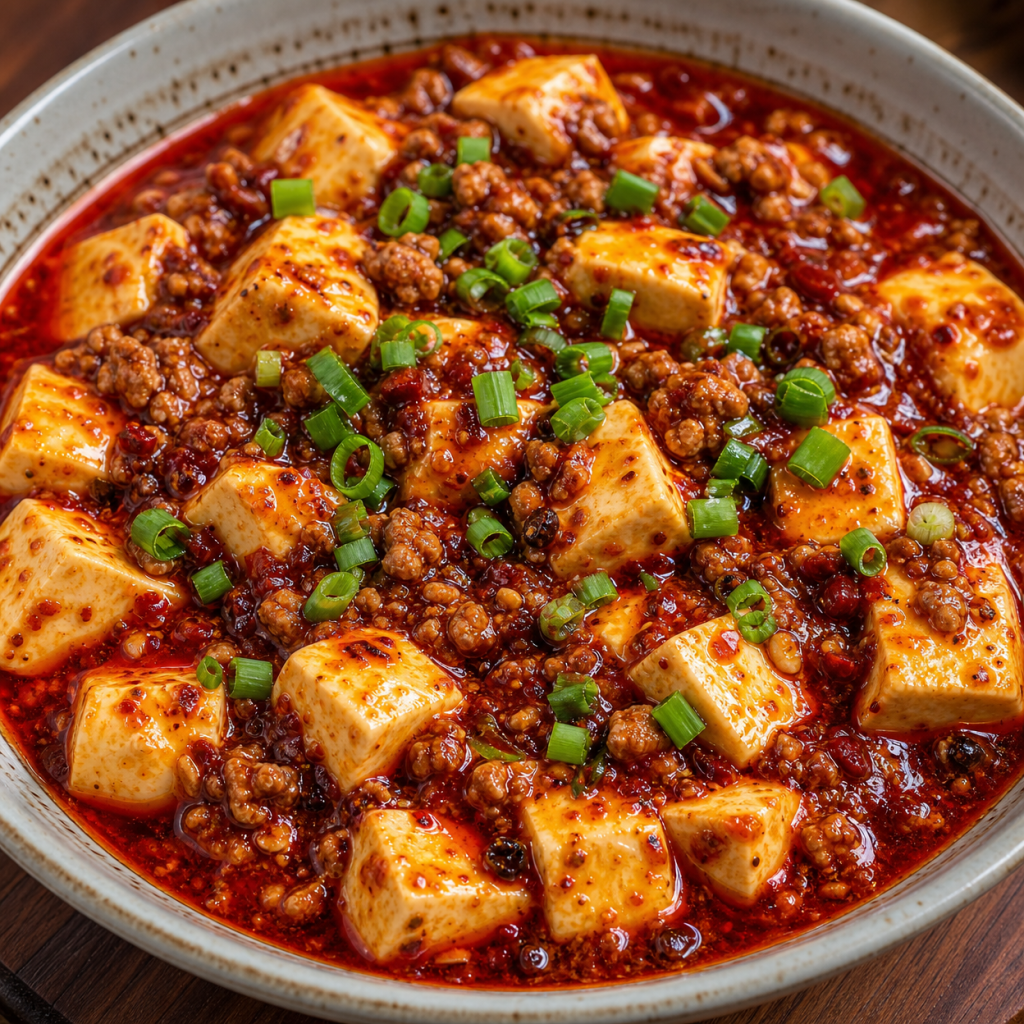
Mapo Tofu is a classic, beloved Sichuan dish of soft, silken tofu cubes simmered gently in a rich, aromatic, spicy sauce built from doubanjiang (spicy fermented broad bean paste), fermented black beans, ground pork, garlic, ginger, and an assertive, generous amount of ground Sichuan peppercorns and chili oil.
The dish is powerfully characterized by the ma la (numbing-spicy) flavor profile that defines authentic, serious Sichuan cooking at its most intense, challenging, and rewarding. This is not a dish for the faint of heart or the spice-averse; it is a dish for those who truly love big, bold, complex, exciting flavors that wake up the palate and linger in the memory.
The Legend of Mapo
The charming, memorable name Mapo (麻婆) means “pockmarked old woman” — a direct, unflinching reference to the Qing Dynasty Chengdu restaurant owner who is lovingly credited with creating this iconic dish. According to cherished food history and local legend, a kind woman with a pockmarked face operated a small, humble restaurant near a bridge in Chengdu and developed a delicious, affordable tofu and beef dish that became so popular, so beloved it eventually bore her descriptive, affectionate nickname.
Whether this charming origin story is entirely, historically accurate, it is widely accepted, cherished, and has given the dish a human, relatable backstory that makes it feel personal, grounded, and rooted — not an abstract, impersonal culinary creation but the warm, living expression of a specific, talented person’s cooking genius and generosity.
Doubanjiang: The Soul of the Sauce
The single most important, defining ingredient in Mapo Tofu — and arguably the most important ingredient in all of Sichuan cooking — is doubanjiang (豆瓣醬): fermented broad bean paste with chilies. The very finest, most prized doubanjiang comes from Pixian county in Sichuan province, where broad beans and chilies have been fermented together patiently in clay pots under the warm Sichuan sun for centuries, using traditional methods passed down through generations. Aged Pixian doubanjiang, which has been fermented for three to five years or even longer, develops an extraordinarily complex, deeply savory, mellow, rounded heat that is fundamentally, dramatically different from younger, sharper, less complex versions.
In Mapo Tofu, the precious doubanjiang is fried in hot oil at the very beginning of cooking — a critical process called chao xiang (stir-frying to release fragrance). As the bean paste hits the hot, shimmering oil, it sizzles and pops dramatically, releasing its aromatic compounds and deepening in color from brick-red to a deep, rich, appetizing mahogany red. This essential frying step is not optional; it is what transforms raw, harsh doubanjiang paste into the complex, fragrant, mellow sauce base that carries the entire, beautiful dish.
The Tofu: Silken Is Essential
The tofu used in authentic, traditional Mapo Tofu is silken or soft tofu — the delicate kind with the consistency of very firm, wobbly custard that shivers and wobbles dramatically when moved. This delicate, high-moisture type of tofu has an extremely high water content and an extremely delicate, fragile, creamy texture that is the precise, intentional opposite of the firm, rubbery, chewy tofu used in stir-fries. In Mapo Tofu, silken tofu absorbs the complex, aromatic sauce beautifully and delivers it in each luxurious bite as a smooth, creamy, melting mouthful rather than a chewy, firm one.
Handling silken tofu requires great care, gentleness, and respect — it breaks very easily. The delicate cubes are typically added to the simmering sauce gently and stirred very minimally, carefully, so they retain their beautiful cube shape throughout the cooking process. A small amount of cornstarch slurry thickens the sauce slightly, helping it to cling attractively to the tender tofu rather than pooling unappealingly at the bottom of the pot.
The Seven Flavor Characteristics
Sichuan culinary tradition holds that authentic, perfect Mapo Tofu should embody seven distinct, essential flavor and textural qualities simultaneously: ma (numbing), la (spicy), tang (hot temperature), xian (fresh and savory), nen (tender), xiang (fragrant), and su (crispy, from the ground meat topping). Achieving all seven desirable qualities simultaneously in a single, humble dish is the true measure of a great, skilled Mapo Tofu cook. It is a challenging, demanding benchmark that separates the merely competent from the truly masterful.
Mapo Tofu’s Global Journey
Of all Sichuan dishes, Mapo Tofu has perhaps traveled furthest geographically and adapted most successfully, lovingly to new culinary environments and taste preferences. In Japan, where exciting Sichuan cuisine was enthusiastically introduced in the mid-20th century by the pioneering, beloved chef Chen Kenmin, a milder, Japanese-adapted version called mabo dofu became a beloved national dish, appearing on family dining tables, in school cafeterias, and in home kitchens across the country.
This popular Japanese version uses less aggressive chili and more miso, creating a gentler, sweeter, more accessible flavor profile that suits Japanese palates beautifully while retaining the basic, recognizable framework of the original. The wonderful existence of two distinct, beloved, successful national versions of the same humble dish is a powerful testament to Mapo Tofu’s extraordinary versatility, adaptability, and universal, enduring appeal across cultures and continents.
The Global Popularity of Dim Sum Culture
Over the past several decades, dim sum has expanded far beyond Southern China and Hong Kong, becoming one of the most internationally recognized forms of Chinese cuisine. Restaurants specializing in dim sum can now be found in major cities all around the world, from New York and Los Angeles to London, Sydney, Singapore, and Toronto.
The appeal of dim sum comes from its social nature, incredible variety, and balance of flavors and textures. Diners are encouraged to share multiple dishes, sample different combinations, and enjoy a relaxed dining experience with friends and family. This sense of togetherness has helped dim sum become much more than a meal — it is a cultural experience that people return to repeatedly.
Traditional dim sum meals are usually enjoyed during brunch or lunchtime, often accompanied by hot Chinese tea. The phrase “yum cha,” which means “drink tea” in Cantonese, reflects the deep connection between tea culture and dim sum dining. Different teas are paired with different dishes to balance richness and refresh the palate. Jasmine tea, pu-erh tea, chrysanthemum tea, and oolong tea are among the most popular choices in classic Cantonese teahouses. The tea not only complements the flavors of the food but also encourages conversation and a slower, more enjoyable dining pace.
Why Authentic Preparation Matters
Authentic dim sum preparation requires patience, precision, and years of experience. Skilled chefs spend years perfecting dough textures, fillings, steaming times, seasoning balances, and presentation techniques. Even a seemingly simple dumpling or bun can involve dozens of small details that determine whether the final result is average or exceptional. High-quality ingredients also play a critical role. Fresh seafood, carefully selected meats, premium soy sauce, sesame oil, and aromatic spices all contribute to the depth of flavor that defines authentic Cantonese cooking.
In many respected dim sum restaurants, recipes are passed down through generations of chefs and families. These traditions preserve techniques that have been refined over hundreds of years. While modern restaurants may experiment with fusion ingredients and contemporary presentation styles, the classic foundations of Cantonese dim sum remain timeless. Diners continue to appreciate dishes that honor tradition while delivering comfort, freshness, and carefully balanced flavor profiles.
Dim Sum as a Shared Experience
One of the greatest reasons dim sum remains beloved worldwide is its ability to bring people together. Families gather around round tables, friends share bamboo steamers filled with freshly prepared dishes, and conversations flow naturally throughout the meal. Unlike individual plated dining experiences, dim sum encourages sharing and interaction. Every dish placed at the center of the table becomes part of a collective experience that creates memories as meaningful as the food itself.
Whether enjoyed at a luxurious Hong Kong tea house or a small neighborhood restaurant, classic dim sum dishes continue to represent warmth, hospitality, and culinary craftsmanship. Their enduring popularity proves that carefully prepared comfort food never goes out of style. For food lovers everywhere, exploring authentic dim sum remains one of the most rewarding journeys in the world of Chinese cuisine.
