Post
Best Peking Duck 2026: The Imperial Chinese Roast That Remains the World’s Greatest Duck Dish
May
Peking Duck: The Imperial Chinese Roast That Remains the World’s Greatest Duck Dish
Some dishes exist in a category entirely their own — preparations so technically demanding, so historically significant, and so genuinely magnificent that they stand apart from everything else in their culinary tradition. Peking Duck is such a dish. This resplendent, glorious roast, with its lacquered, jade-glossy, mahogany skin that shatters dramatically at the first bite and its moist, fragrant, succulent flesh, has been impressing and delighting diners for at least 600 years and shows no signs of losing its capacity to astonish. From the imperial kitchens of the Forbidden City to the finest restaurants in Beijing, London, New York, and Tokyo, Peking Duck remains the gold standard of roasted poultry, the dish that every serious chef aspires to master and every serious eater dreams of experiencing. It is not merely food; it is theater, history, and art on a plate.
What Is Peking Duck?
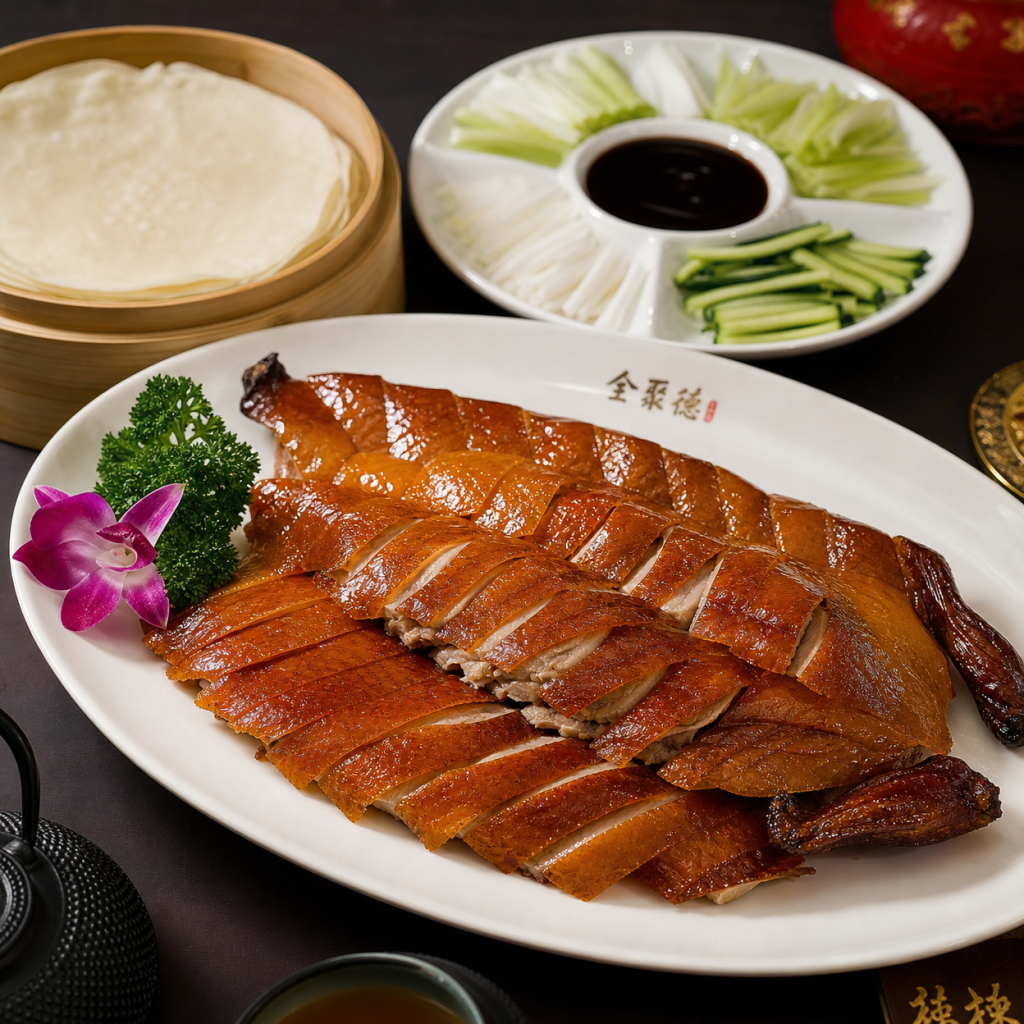
Peking Duck (北京烤鴨, Beijing Kaoya) is a whole roasted duck characterized by its impossibly thin, papery, crispy, shatteringly delicate skin — the remarkable result of a meticulous, multi-day preparation process that requires patience, precision, and skill — served with thin, delicate Mandarin pancakes, shredded scallions, cucumber batons, and rich, sweet, dark hoisin sauce. The duck is typically carved dramatically at the table by a specialist chef, who separates the precious, crispy skin from the moist flesh with practiced, efficient, artistic strokes and presents both on separate plates. The eating experience is a ritual: a pancake is spread with a thin layer of hoisin sauce, topped with scallions and cucumber, then a piece of crispy skin and a piece of tender meat. The pancake is rolled or folded and eaten by hand. Each bite is a perfect harmony of textures and flavors — crisp, soft, savory, sweet, fresh, and rich all at once.
The History of Imperial Duck
The earliest records of a dish resembling Peking Duck appear in ancient Chinese texts from the Yuan Dynasty (1271-1368), and by the time of the Ming Dynasty (1368-1644), it had become a beloved, prestigious fixture of imperial court cuisine in Beijing. The fortunate proximity of Beijing to the marshlands, rivers, and lakes of northern China made duck an abundant, accessible, and natural ingredient, and imperial chefs developed increasingly sophisticated, refined techniques for preparing it over the centuries. The dish as we know and revere it today was likely perfected during the Qing Dynasty (1644-1912), when the imperial kitchen of the Forbidden City employed dedicated, specialist chefs whose sole, honorable responsibility was the preparation of roast duck for the emperor and his royal court. These elite specialists developed the signature techniques — the careful inflation, the precise glazing, the specific, specialized oven design — that define authentic, traditional Peking Duck to this very day. The knowledge was passed down through generations, closely guarded, and only gradually shared with the wider world.
The Preparation: A Multi-Day Process
The dedicated preparation of authentic Peking Duck begins at least two full days before the duck is even served. On day one, the duck is meticulously cleaned and the excess fat is carefully removed. Air is then pumped between the delicate skin and the fat layer through the neck cavity — a process that gently separates the skin from the underlying fat, ensuring it will crisp beautifully, independently during roasting rather than steaming unpleasantly in the rendered fat. The duck is then blanched briefly in boiling water to tighten the skin and rinse away any residual, surface fat. The blanched duck is coated with a glaze made from maltose, soy sauce, vinegar, and sometimes honey or wine. This beautiful, glossy glaze will form the characteristic dark, lacquered, mahogany skin during roasting. After glazing, the duck is hung in a cool, well-ventilated space to air-dry. On day two, the duck continues drying for 24 to 48 hours, during which the skin becomes progressively more taut, papery, and dry. This extensive, patient drying is absolutely crucial to achieving the lacquered, shattering, paper-thin skin that defines great Peking Duck. Before roasting, the duck is seasoned inside the cavity with additional spices. Finally, the duck is roasted in a specialized oven — traditionally a wood-fired barrel oven using fragrant fruit woods such as apple or pear, which impart a subtle, pleasant sweetness and fragrance to the skin. The temperature and duration are carefully controlled, and the duck is rotated periodically for even, beautiful browning. The finished duck should have skin of a deep, lacquered, red-brown that is completely dry, rigid, and shatteringly crisp to the touch.
The Carving: Theater at the Table
The tableside carving of Peking Duck is one of the greatest, most dramatic theatrical moments in all of restaurant dining, anywhere in the world. A specialist carver works quickly, efficiently, and precisely, using a sharp cleaver or long knife to separate the precious, crispy skin from the succulent flesh in broad, thin, even, glistening slices. The precious skin is presented separately from the moist flesh — a deliberate, respectful choice that allows discerning diners to experience the skin at the absolute peak of its crispiness, before it has had any time to soften in contact with the moist flesh beneath. The assembly of each perfect bite is a small, meditative ritual: a thin, delicate Mandarin pancake is laid flat, a small amount of rich hoisin sauce is brushed on, shredded scallions and cucumber batons are placed, and finally a piece of crackling, shattering skin and a piece of tender, moist duck flesh are added before the pancake is folded or rolled around the precious filling. The sublime combination — soft, thin pancake; rich, sweet, dark hoisin; cool, fresh, crisp vegetables; and the extraordinary, dramatic contrast of crispy, shattering skin and tender, moist, flavorful meat — is one of the most perfectly, exquisitely constructed mouthfuls in all of Chinese cuisine, indeed in all of world cuisine.
Peking Duck Today
The world’s most celebrated, revered Peking Duck restaurants are still concentrated in Beijing, where historic, legendary establishments like Quanjude (founded in 1864) and Da Dong have refined, perfected, and elevated the glorious dish over generations, each with their own treasured techniques and loyal followers. But the great, imperial roast has traveled gloriously globally, and exceptional, memorable versions can now be found in major Chinese dining destinations worldwide, from San Francisco to London to Sydney to Singapore. Whether eaten in a historic, venerable Beijing establishment or a contemporary, innovative restaurant overseas, Peking Duck remains what it has always been for over six centuries: a dish that commands respect, demands extraordinary skill, and delivers transcendent, unforgettable pleasure. It is the emperor of ducks, and it always will be.
The Global Popularity of Dim Sum Culture
Over the past several decades, dim sum has expanded far beyond Southern China and Hong Kong, becoming one of the most internationally recognized forms of Chinese cuisine. Restaurants specializing in dim sum can now be found in major cities all around the world, from New York and Los Angeles to London, Sydney, Singapore, and Toronto. The appeal of dim sum comes from its social nature, incredible variety, and balance of flavors and textures. Diners are encouraged to share multiple dishes, sample different combinations, and enjoy a relaxed dining experience with friends and family. This sense of togetherness has helped dim sum become much more than a meal — it is a cultural experience that people return to repeatedly.
Traditional dim sum meals are usually enjoyed during brunch or lunchtime, often accompanied by hot Chinese tea. The phrase “yum cha,” which means “drink tea” in Cantonese, reflects the deep connection between tea culture and dim sum dining. Different teas are paired with different dishes to balance richness and refresh the palate. Jasmine tea, pu-erh tea, chrysanthemum tea, and oolong tea are among the most popular choices in classic Cantonese teahouses. The tea not only complements the flavors of the food but also encourages conversation and a slower, more enjoyable dining pace.
Why Authentic Preparation Matters
Authentic dim sum preparation requires patience, precision, and years of experience. Skilled chefs spend years perfecting dough textures, fillings, steaming times, seasoning balances, and presentation techniques. Even a seemingly simple dumpling or bun can involve dozens of small details that determine whether the final result is average or exceptional. High-quality ingredients also play a critical role. Fresh seafood, carefully selected meats, premium soy sauce, sesame oil, and aromatic spices all contribute to the depth of flavor that defines authentic Cantonese cooking.
In many respected dim sum restaurants, recipes are passed down through generations of chefs and families. These traditions preserve techniques that have been refined over hundreds of years. While modern restaurants may experiment with fusion ingredients and contemporary presentation styles, the classic foundations of Cantonese dim sum remain timeless. Diners continue to appreciate dishes that honor tradition while delivering comfort, freshness, and carefully balanced flavor profiles.
Dim Sum as a Shared Experience
One of the greatest reasons dim sum remains beloved worldwide is its ability to bring people together. Families gather around round tables, friends share bamboo steamers filled with freshly prepared dishes, and conversations flow naturally throughout the meal. Unlike individual plated dining experiences, dim sum encourages sharing and interaction. Every dish placed at the center of the table becomes part of a collective experience that creates memories as meaningful as the food itself.
Whether enjoyed at a luxurious Hong Kong tea house or a small neighborhood restaurant, classic dim sum dishes continue to represent warmth, hospitality, and culinary craftsmanship. Their enduring popularity proves that carefully prepared comfort food never goes out of style. For food lovers everywhere, exploring authentic dim sum remains one of the most rewarding journeys in the world of Chinese cuisine.
