Post
Best Wonton Noodle Soup 2026: Why This Cantonese Comfort Bowl Is Pure Culinary Genius
May
Wonton Noodle Soup: Why This Cantonese Comfort Bowl Is Pure Culinary Genius
There are certain dishes that seem deceptively simple until you actually try to make them properly, at which point their hidden complexity reveals itself gradually, and you begin to understand why they have endured, beloved, for centuries. Wonton Noodle Soup — that deceptively modest, humble bowl of delicate wontons, springy, resilient egg noodles, and clear, golden, fragrant broth — is one of these humbling dishes.
Every single element requires precision, patience, skill, practice, and the very best possible ingredients. When all three elements come together perfectly, in perfect harmony, the result is one of the most satisfying, comforting, nourishing bowls of food that Chinese cuisine has ever produced. It is the ultimate comfort food — the dish you crave when you are sick, tired, cold, or simply in need of something warm, soothing, and delicious.
What Is Wonton Noodle Soup?
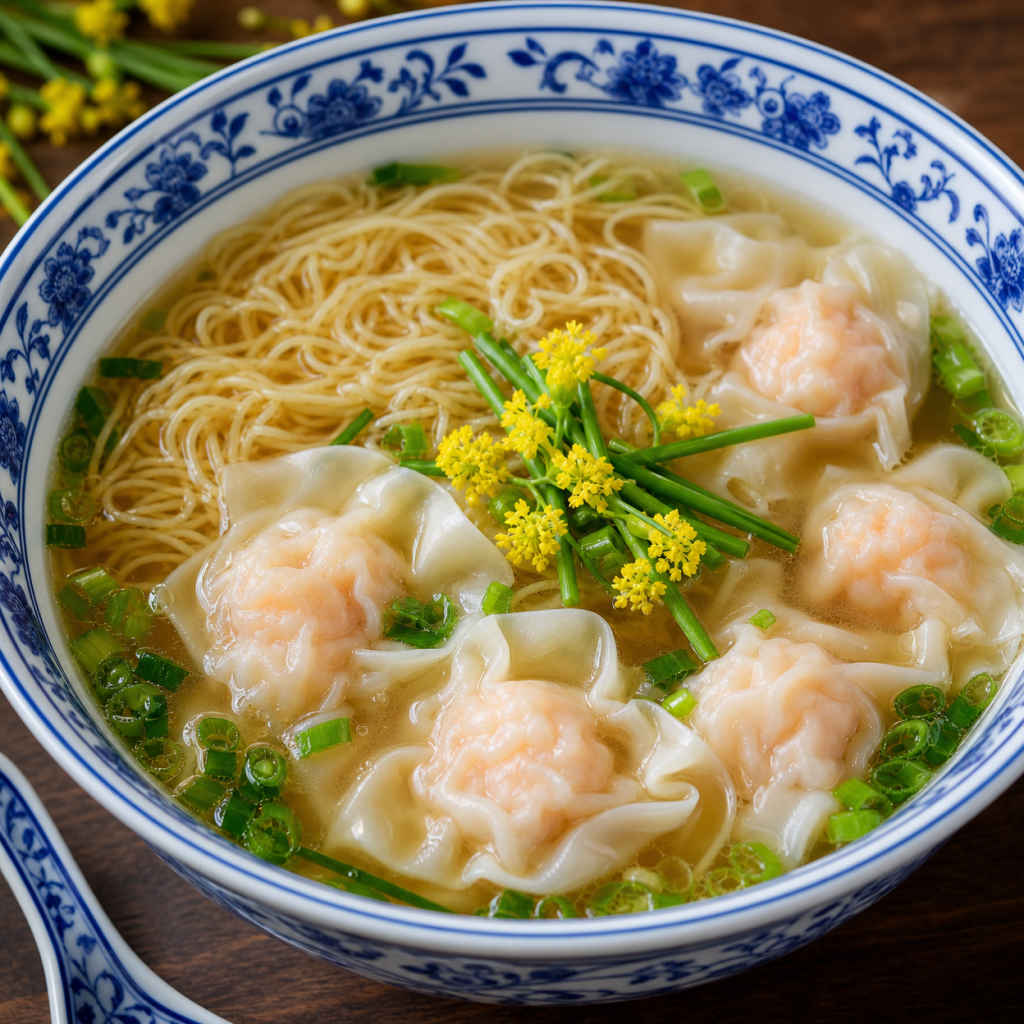
Wonton Noodle Soup (雲吞麵) is a classic Cantonese dish consisting of thin, springy, resilient alkaline egg noodles and silky, thin-skinned, delicate wontons filled with fresh shrimp and seasoned pork, served in a clear, golden, fragrant chicken and pork bone broth.
The dish is traditionally garnished with blanched leafy greens — typically yu choy or bok choy — and a final, finishing drizzle of toasted sesame oil. In Hong Kong, where this humble dish has been elevated to a true art form, it is typically eaten as a quick, satisfying breakfast or lunch, consumed at small, efficient, specialized noodle shops where the broth simmers perpetually on the stove for days or weeks, and the wontons are folded fresh to order by skilled hands. The dish is the pride of Hong Kong noodle culture.
The Broth: The Foundation of Everything
The broth of a great, memorable Wonton Noodle Soup is made by slowly, patiently simmering pork and chicken bones with dried flounder fish and dried shrimp shells for four to eight hours, or even longer, until the liquid has reduced and concentrated into something that is simultaneously light in color yet deeply, profoundly, complexly flavorful. The key, defining characteristic of authentic Hong Kong-style wonton soup broth is its exceptional clarity — it should be golden, translucent, and almost jewel-like, not murky, cloudy, or muddy.
This remarkable clarity is achieved by carefully, diligently skimming impurities and foam during the initial simmering and maintaining a gentle, barely-moving bubble rather than a rolling, turbulent boil throughout the long cooking process. The dried flounder (a flat, mild, delicate fish used specifically for this purpose) adds a subtle, pleasant marine depth that gives the broth its distinctive, memorable character. The pork bones provide body, richness, and a gentle, lingering savoriness. Together, they create a broth that tastes simultaneously light, clean and deeply satisfying — clean on the palate but with a lingering, savory depth that keeps drawing you back for another spoonful, again and again.
The Wontons: Small Packages, Big Flavor
Cantonese wontons are distinctly different from the thicker, chewier, doughier wontons of other regional Chinese traditions. They are wrapped in an exceptionally thin, almost translucent, delicate skin that is much more fragile and refined than northern-style wonton wrappers. The filling is a beautiful mixture of whole or roughly chopped fresh shrimp and seasoned ground pork — the shrimp should be large enough to create a visible, appealing presence inside the thin wrapper and should remain plump, juicy, and sweet after cooking.
The wrapping technique for Cantonese wontons is quick, efficient, and distinctive — the filling is placed in the center of the square wrapper, which is then gathered into a loose, elegant pouch and twisted shut, leaving a small crown of wrapper petals at the top. This beautiful “goldfish tail” or “nurse’s cap” shape is characteristic of Hong Kong-style wontons and is achieved through a practiced, efficient one-handed technique that experienced wonton makers can execute dozens of times per minute without even looking.
The Noodles: Alkaline and Springy
The noodles in Wonton Noodle Soup are thin, yellow, resilient alkaline egg noodles — their characteristic spring, bounce, and pleasant chew comes from the addition of lye water (potassium or sodium carbonate solution) to the dough, which raises the pH significantly and causes the gluten proteins to develop differently, creating a firmer, more resilient structure. The result is a noodle that is firmer, more springy, more elastic, and more resilient than regular egg noodles — it literally bounces back when bitten rather than yielding softly, creating a unique, satisfying textural experience that is quite distinctive from Italian-style egg pasta or Japanese ramen.
These special noodles are cooked separately from the wontons, blanched very briefly in boiling water — typically 30 to 60 seconds maximum — so they remain al dente, firm, and can absorb the fragrant broth slowly as the dish is eaten. They are then drained carefully, placed in the serving bowl, and topped with the wontons and hot broth.
Eating Wonton Noodle Soup: The Proper Approach
There is some lively debate among purists and noodle enthusiasts about the correct, proper way to eat Wonton Noodle Soup. One school of thought holds that the noodles should be eaten first, quickly — their delicate flavor is most apparent when they are freshest, and they should be enjoyed before the hot broth softens them further and they lose their bounce. Another proud tradition involves eating everything together harmoniously from the very first spoonful, enjoying the interplay of textures and flavors simultaneously in each bite.
Both approaches are valid, but most experienced, serious wonton noodle soup eaters emphasize the importance of eating quickly, efficiently — this is not a dish to be lingered over for hours, as the noodles will become soft and the wontons may become waterlogged if the bowl sits untouched for too long. The ideal eating experience is fast, focused, and deeply satisfying.
The Legacy of Hong Kong Wonton Shops
Some of Hong Kong’s most beloved, cherished, and long-established wonton noodle shops have been operating continuously for 50 years or more, serving essentially the same simple menu with the same treasured family recipes to multiple generations of loyal, devoted customers. These humble shops are regarded as true cultural institutions — small, unassuming, often family-run establishments where the quality of the product is the sole, overriding consideration and the atmosphere is utilitarian, functional rather than decorative.
To eat at one of these venerable establishments is to participate in an unbroken, living culinary tradition that connects the present moment to the past in the most direct, satisfying, and delicious way possible: through the profound pleasure of a beautifully, lovingly made bowl of simple food.
The Global Popularity of Dim Sum Culture
Over the past several decades, dim sum has expanded far beyond Southern China and Hong Kong, becoming one of the most internationally recognized forms of Chinese cuisine. Restaurants specializing in dim sum can now be found in major cities all around the world, from New York and Los Angeles to London, Sydney, Singapore, and Toronto. The appeal of dim sum comes from its social nature, incredible variety, and balance of flavors and textures.
Diners are encouraged to share multiple dishes, sample different combinations, and enjoy a relaxed dining experience with friends and family. This sense of togetherness has helped dim sum become much more than a meal — it is a cultural experience that people return to repeatedly.
Traditional dim sum meals are usually enjoyed during brunch or lunchtime, often accompanied by hot Chinese tea. The phrase “yum cha,” which means “drink tea” in Cantonese, reflects the deep connection between tea culture and dim sum dining. Different teas are paired with different dishes to balance richness and refresh the palate.
Jasmine tea, pu-erh tea, chrysanthemum tea, and oolong tea are among the most popular choices in classic Cantonese teahouses. The tea not only complements the flavors of the food but also encourages conversation and a slower, more enjoyable dining pace.
Why Authentic Preparation Matters
Authentic dim sum preparation requires patience, precision, and years of experience. Skilled chefs spend years perfecting dough textures, fillings, steaming times, seasoning balances, and presentation techniques. Even a seemingly simple dumpling or bun can involve dozens of small details that determine whether the final result is average or exceptional. High-quality ingredients also play a critical role. Fresh seafood, carefully selected meats, premium soy sauce, sesame oil, and aromatic spices all contribute to the depth of flavor that defines authentic Cantonese cooking.
In many respected dim sum restaurants, recipes are passed down through generations of chefs and families. These traditions preserve techniques that have been refined over hundreds of years. While modern restaurants may experiment with fusion ingredients and contemporary presentation styles, the classic foundations of Cantonese dim sum remain timeless. Diners continue to appreciate dishes that honor tradition while delivering comfort, freshness, and carefully balanced flavor profiles.
Dim Sum as a Shared Experience
One of the greatest reasons dim sum remains beloved worldwide is its ability to bring people together. Families gather around round tables, friends share bamboo steamers filled with freshly prepared dishes, and conversations flow naturally throughout the meal. Unlike individual plated dining experiences, dim sum encourages sharing and interaction. Every dish placed at the center of the table becomes part of a collective experience that creates memories as meaningful as the food itself.
Whether enjoyed at a luxurious Hong Kong tea house or a small neighborhood restaurant, classic dim sum dishes continue to represent warmth, hospitality, and culinary craftsmanship. Their enduring popularity proves that carefully prepared comfort food never goes out of style. For food lovers everywhere, exploring authentic dim sum remains one of the most rewarding journeys in the world of Chinese cuisine.
