Post
Best Yang Chow Fried Rice 2026: The Classic Chinese Rice Dish That Conquered the World
May
Yang Chow Fried Rice: The Classic Chinese Rice Dish That Conquered the World
If you were to survey the menus of Chinese restaurants across every continent and count which dishes appear most consistently, frequently, and universally, Yang Chow Fried Rice would almost certainly rank near the very top of the list, if not at the absolute top.
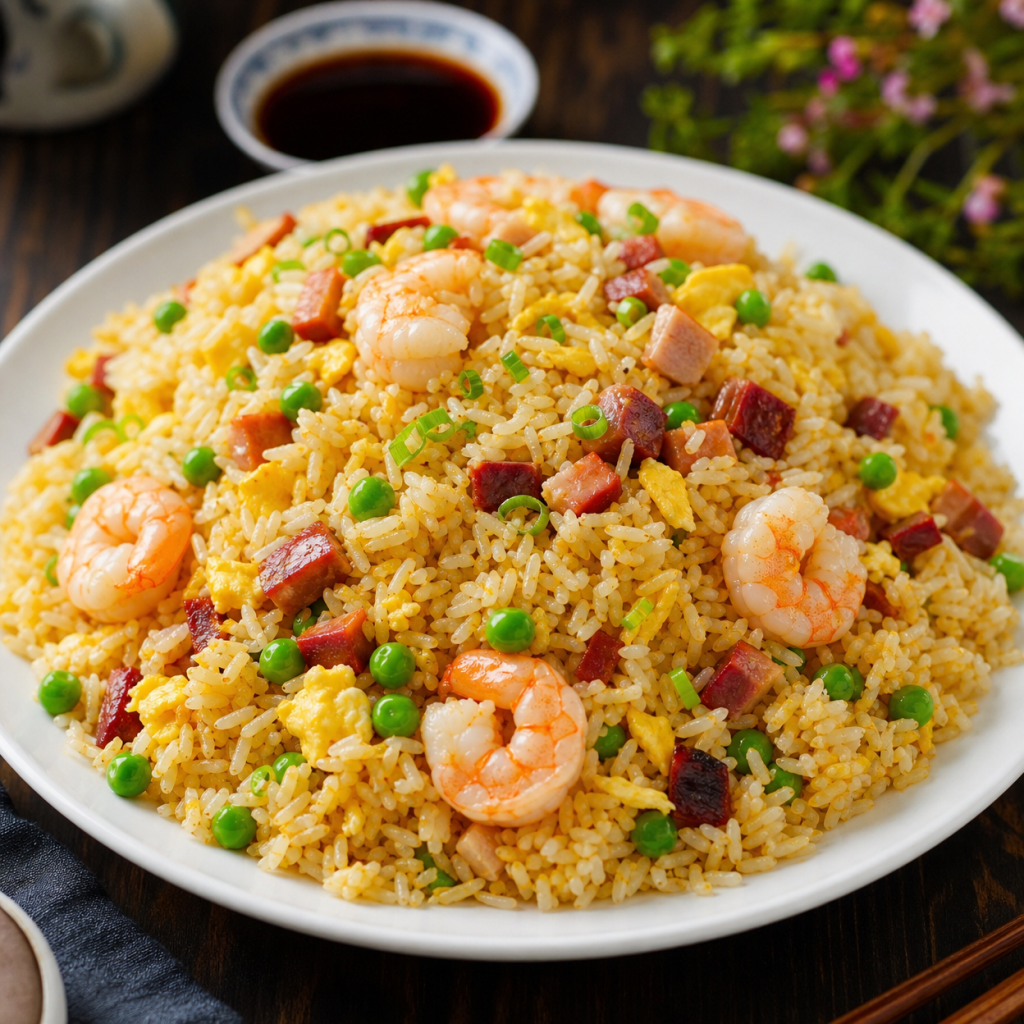
This celebrated, beloved combination of day-old jasmine rice, fluffy eggs, sweet shrimp, savory BBQ pork, and colorful vegetables has become one of the most universally recognizable, widely enjoyed Chinese dishes in the world — a true culinary ambassador that has introduced countless people to the pleasures, techniques, and flavors of Chinese cooking through its accessible, familiar, deeply satisfying flavor profile. Unlike more exotic or challenging dishes, Yang Chow Fried Rice is comforting, familiar, and universally appealing. It is often the first Chinese dish a person learns to make and the dish that families request again and again.
The Origins of Yang Chow Fried Rice
Yang Chow Fried Rice takes its distinguished name from Yangzhou, a historic, culturally rich city in Jiangsu province that has been a center of Chinese gastronomy, art, and culture for over a thousand years. During the Sui Dynasty, Yangzhou was one of the wealthiest, most sophisticated, most culturally advanced cities in all of China, and its refined cuisine reflected that prosperity, sophistication, and access to high-quality ingredients. The egg fried rice that originated there was a refined, carefully balanced, elegant dish rather than the humble leftover-transformation that fried rice often is in domestic, everyday cooking. It was a dish designed to showcase the quality of each individual ingredient, with nothing hidden or muddled.
The dish spread throughout China over the centuries and, ultimately, throughout the entire world, carried by waves of Chinese immigrants who brought their culinary traditions, skills, and recipes to every corner of the globe. In each new location, the dish adapted slightly to local ingredients, tastes, and preferences while retaining its fundamental, recognizable character. Today, Yang Chow Fried Rice appears on menus in New York, London, Tokyo, São Paulo, Sydney, Lagos, and countless other cities — often with local variations but always recognizable as the same fundamental, beloved dish.
The Key Components
The most important, non-negotiable rule of excellent fried rice is using rice that has been cooked and refrigerated for at least overnight, and preferably for 24 hours. Freshly cooked rice contains too much moisture — when added to a hot wok, it steams rather than fries, clumps together unappealingly, and becomes mushy rather than developing individual, separated grains. Day-old rice has dried out sufficiently in the refrigerator that each individual grain separates easily in the wok and can develop a slight, pleasant crust from direct contact with the hot metal. This individual grain texture, with each grain distinct and slightly chewy, is one of the defining, essential characteristics of excellent fried rice.
Diced char siu (Chinese BBQ pork) provides the signature sweet, caramelized, savory pork flavor that gives Yang Chow Fried Rice its characteristic depth, richness, and umami. The char siu should be in relatively small, uniform pieces so it distributes evenly throughout the rice rather than clumping in certain bites. Medium-sized shrimp, quickly, briefly cooked in the hot wok, provide bursts of sweet, clean seafood flavor and a pleasing, pleasant textural contrast with the soft rice and chewy pork.
They should be cooked just until pink and curled — overcooked shrimp become rubbery, tough, and unpleasant. Beaten eggs are scrambled directly in the hot wok with the rice — a technique that coats each individual grain of rice with a thin, golden layer of cooked egg, adding richness, color, and binding the dish together slightly without making it heavy or soggy. Green peas, finely diced carrots, and fresh scallions add color, freshness, sweetness, and textural variety. The vegetables are cooked briefly, lightly so they retain some pleasant bite and their vibrant, appetizing color.
The Seasoning
Yang Chow Fried Rice is seasoned with a careful, restrained combination of light soy sauce, a small amount of dark soy sauce primarily for color, white pepper, and toasted sesame oil. The seasoning should be restrained, subtle, and balanced — the goal is to enhance the natural, individual flavors of the high-quality ingredients rather than to overwhelm or mask them with heavy sauce. The finished rice should be fragrant, savory, and moist without being oily, greasy, or overly salty. A great Yang Chow Fried Rice tastes clean, fresh, and satisfying, with each bite offering a slightly different combination of ingredients.
Technique: Making Fried Rice Like a Professional
Professional Chinese cooks use several specific techniques that dedicated home cooks can learn, practice, and approximate. First, the wok is heated until it just begins to smoke before any oil is added. Second, the oil is added and heated until it shimmers and flows easily. Third, the aromatics (typically minced garlic and sometimes ginger) are added and cooked for a matter of seconds before the day-old rice goes in.
The rice is then spread across the wok surface in a thin, even layer and allowed to sit undisturbed for 20 to 30 seconds without stirring, allowing the bottom layer to develop a slight, pleasant golden crust. Fourth, the eggs are pushed to one side of the wok, scrambled quickly, and then mixed through the rice. Fifth, the remaining ingredients (char siu, shrimp, vegetables) are added and tossed together quickly, vigorously. Sixth, the dish is seasoned and immediately, without delay plated — fried rice that sits in the wok continues to cook and steam and can become gummy, musky, and unappealing.
Yang Chow Fried Rice Around the World
The global journey of Yang Chow Fried Rice has produced fascinating, delicious regional variations that tell the story of Chinese diaspora and culinary adaptation. In Peru, Chinese fried rice mixed with local ingredients became arroz chaufa, a beloved national dish that brilliantly blends Cantonese technique with South American ingredients like cilantro, aji peppers, and sometimes even hot dogs.
In Indonesia, nasi goreng shares some DNA with Chinese fried rice while incorporating local chili pastes (sambal), sweet soy sauce (kecap manis), and ingredients. In the Philippines, sinangag is a garlic fried rice that shows clear Chinese influence. Each delicious variation tells part of the ongoing story of how Chinese culinary culture has enriched, influenced, and been enriched by food traditions worldwide. Yang Chow Fried Rice is more than just a dish; it is a global phenomenon and a testament to the universal appeal of good food.
The Global Popularity of Dim Sum Culture
Over the past several decades, dim sum has expanded far beyond Southern China and Hong Kong, becoming one of the most internationally recognized forms of Chinese cuisine. Restaurants specializing in dim sum can now be found in major cities all around the world, from New York and Los Angeles to London, Sydney, Singapore, and Toronto.
The appeal of dim sum comes from its social nature, incredible variety, and balance of flavors and textures. Diners are encouraged to share multiple dishes, sample different combinations, and enjoy a relaxed dining experience with friends and family. This sense of togetherness has helped dim sum become much more than a meal — it is a cultural experience that people return to repeatedly.
Traditional dim sum meals are usually enjoyed during brunch or lunchtime, often accompanied by hot Chinese tea. The phrase “yum cha,” which means “drink tea” in Cantonese, reflects the deep connection between tea culture and dim sum dining. Different teas are paired with different dishes to balance richness and refresh the palate. Jasmine tea, pu-erh tea, chrysanthemum tea, and oolong tea are among the most popular choices in classic Cantonese teahouses. The tea not only complements the flavors of the food but also encourages conversation and a slower, more enjoyable dining pace.
Why Authentic Preparation Matters
Authentic dim sum preparation requires patience, precision, and years of experience. Skilled chefs spend years perfecting dough textures, fillings, steaming times, seasoning balances, and presentation techniques. Even a seemingly simple dumpling or bun can involve dozens of small details that determine whether the final result is average or exceptional. High-quality ingredients also play a critical role. Fresh seafood, carefully selected meats, premium soy sauce, sesame oil, and aromatic spices all contribute to the depth of flavor that defines authentic Cantonese cooking.
In many respected dim sum restaurants, recipes are passed down through generations of chefs and families. These traditions preserve techniques that have been refined over hundreds of years. While modern restaurants may experiment with fusion ingredients and contemporary presentation styles, the classic foundations of Cantonese dim sum remain timeless. Diners continue to appreciate dishes that honor tradition while delivering comfort, freshness, and carefully balanced flavor profiles.
Dim Sum as a Shared Experience
One of the greatest reasons dim sum remains beloved worldwide is its ability to bring people together. Families gather around round tables, friends share bamboo steamers filled with freshly prepared dishes, and conversations flow naturally throughout the meal. Unlike individual plated dining experiences, dim sum encourages sharing and interaction. Every dish placed at the center of the table becomes part of a collective experience that creates memories as meaningful as the food itself.
Whether enjoyed at a luxurious Hong Kong tea house or a small neighborhood restaurant, classic dim sum dishes continue to represent warmth, hospitality, and culinary craftsmanship. Their enduring popularity proves that carefully prepared comfort food never goes out of style. For food lovers everywhere, exploring authentic dim sum remains one of the most rewarding journeys in the world of Chinese cuisine.
